
Following on from our recent deep dive into the art of the triple jump, we now turn our attention to another classic: the long jump.
At FAST Running, we treat long jump not just as a take-off and landing — but as a full-body conversation between speed, control, posture, and timing. And just like triple, we know that seeing is understanding.
Our jumpers spend time not only on the runway but behind the camera. Through video review and guided visualisation, we help athletes unpack the feel of the jump with the facts of what’s actually happening in each phase: the approach, take-off, flight, and landing.
We slow things down — literally — to pick up on:
- How and where the penultimate step starts to lower the centre of mass.
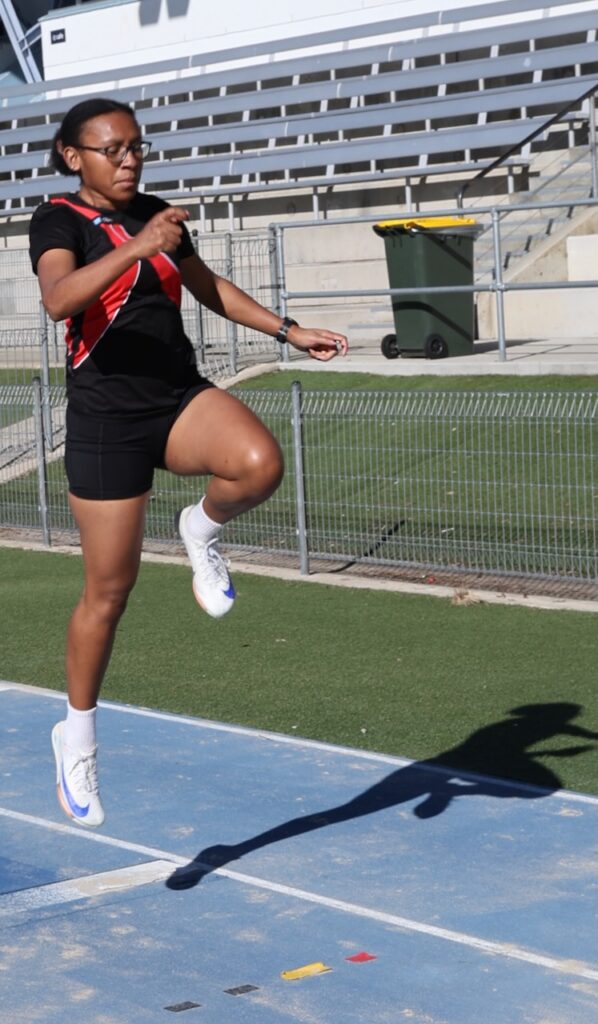
- Whether the take-off foot strikes under the hip or too far ahead.
- How the body lifts off the board — tall, flat, or over-rotated.
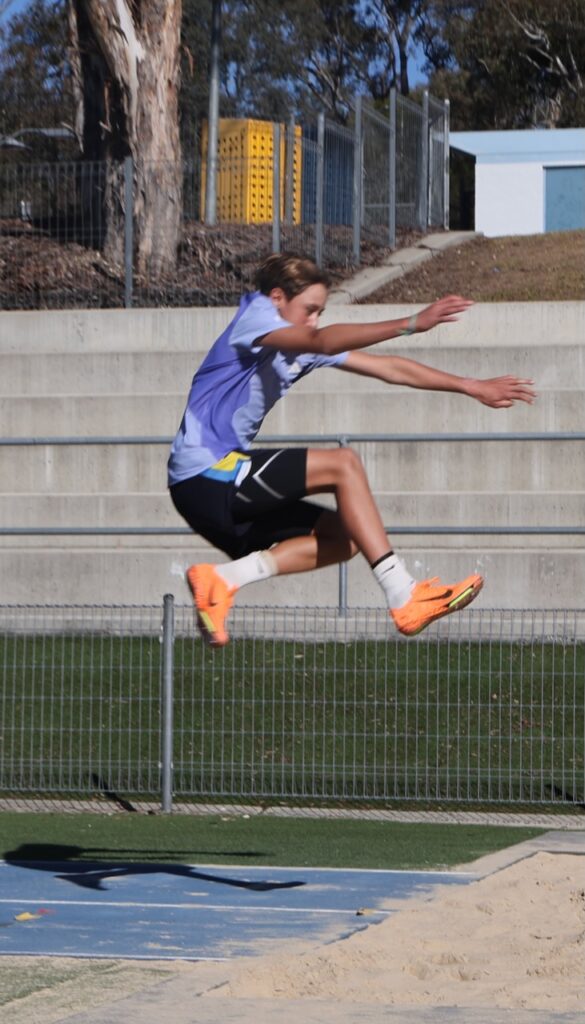
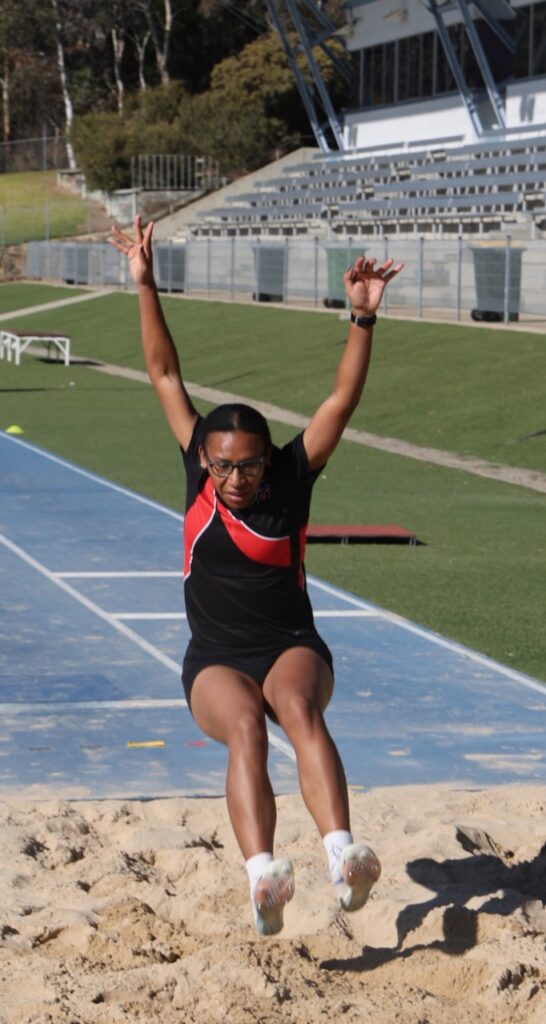
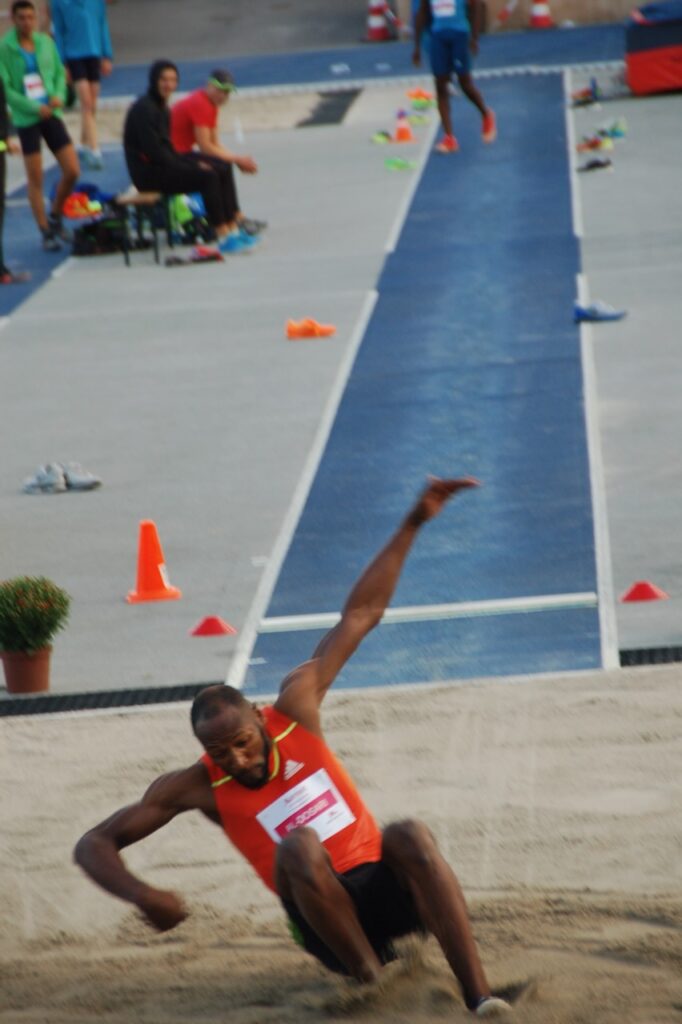
- Whether the flight is controlled, and the landing aggressive yet clean.
From there, it’s all about feedback: we anchor what we see to short, sharp cues like:
- “Run tall into the board.”
- “Pop and rise — don’t sink.”
- “Stretch the flight — reach for the sky.”
- “Chin down, arms forward, land long.”
This process transforms passive training into active learning. Athletes begin to correct posture in real time. They experiment. They adapt. And most importantly, they start to own their technique.
Each jump becomes not just an effort — but a statement of intent. And with every frame we review, we close the gap between training and performance.
Stay tuned for more in this series as we continue unpacking the tools, tech, and coaching methods that support FAST athletes to jump further, land cleaner, and rise higher.
APPROACH RUN (THE RUN-UP)
Goal: Maximise horizontal speed while staying controlled and consistent.
- Posture: Tall, relaxed sprinting with good rhythm and forward lean that rises slightly in the last 3–4 steps.
- Stride pattern: Progressive acceleration, not max speed from the start.
- Target cadence: High turnover in final steps with aggressive rhythm.
- Penultimate step: Slightly longer and lower to start lowering the center of mass.
- Last step: Shorter and flat — the “plant step” to initiate vertical lift.
✅ Key to success: Repeatable run-up (same number of steps every time, consistent take-off placement) with maximal controllable speed.


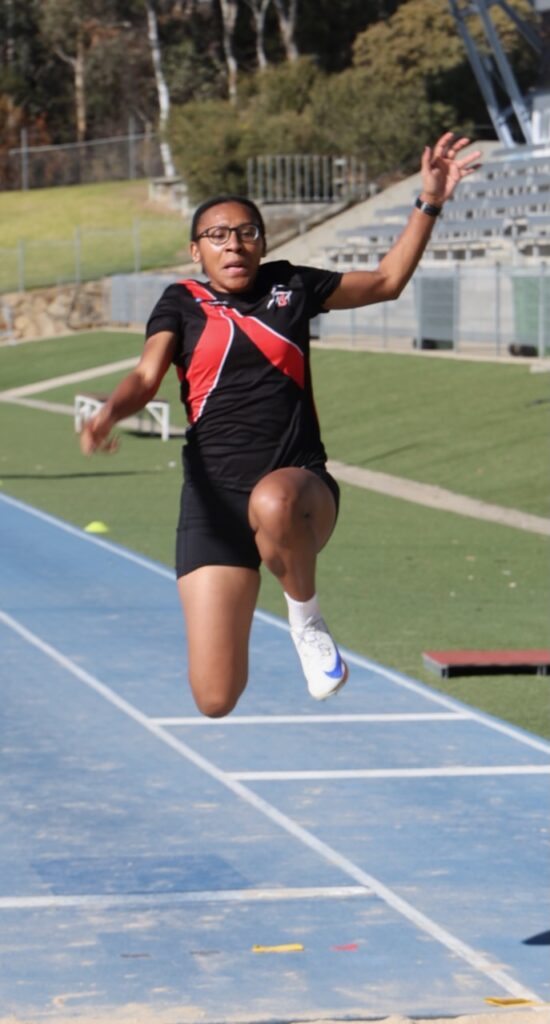
TAKE-OFF
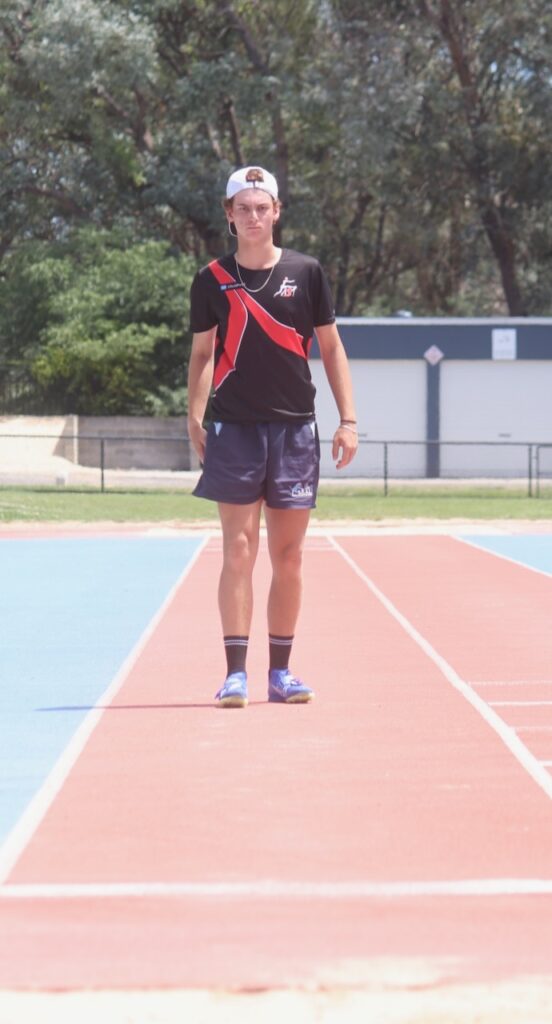
Goal: Convert horizontal velocity into vertical lift without excessive braking.
- Foot contact: Flat foot or slight heel-to-flat under center of mass — not on toes.
- Take-off angle: Around 18–22° (higher for juniors or lower strength levels)
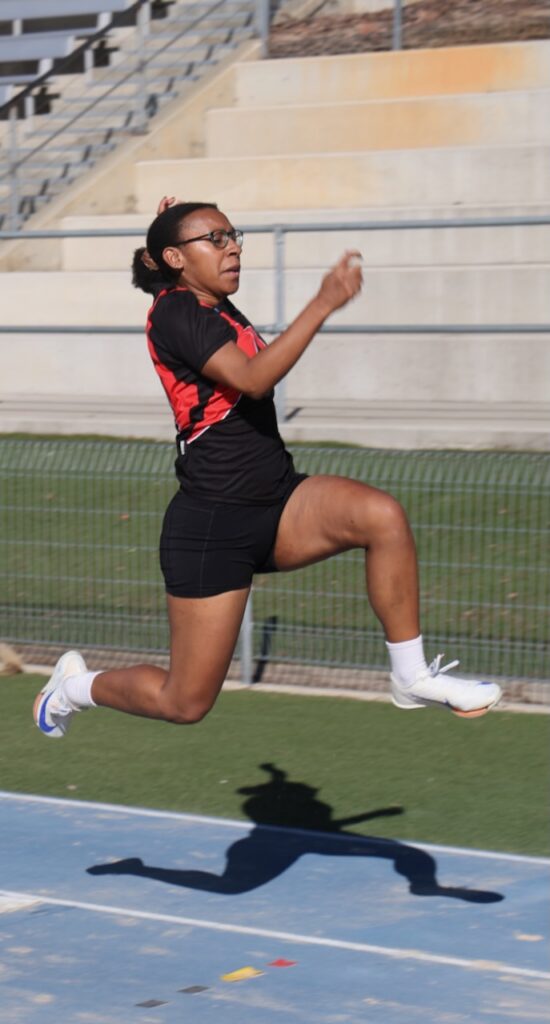
- Free leg (swing leg): Powerful drive forward and upward (high knee lift).
- Arms: Coordinated with the swing leg — either:
- Double-arm action (more lift)
- Single-arm action (more rhythm for some sprinters)
- Body position: Tall torso, avoid leaning back or collapsing into the board.
✅ Key to success: “Attack the board” — punch off it explosively without letting the body sink or decelerate.






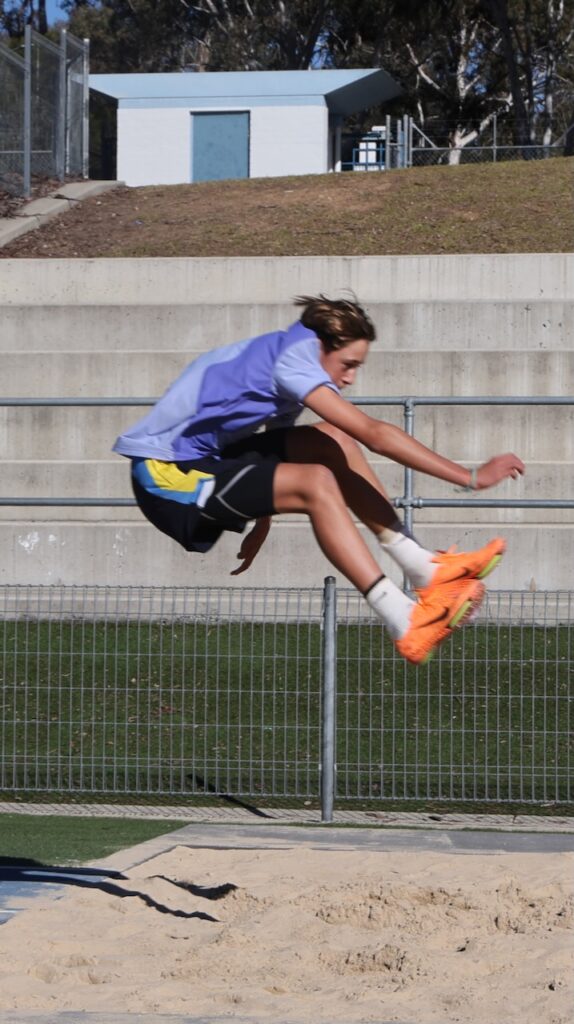
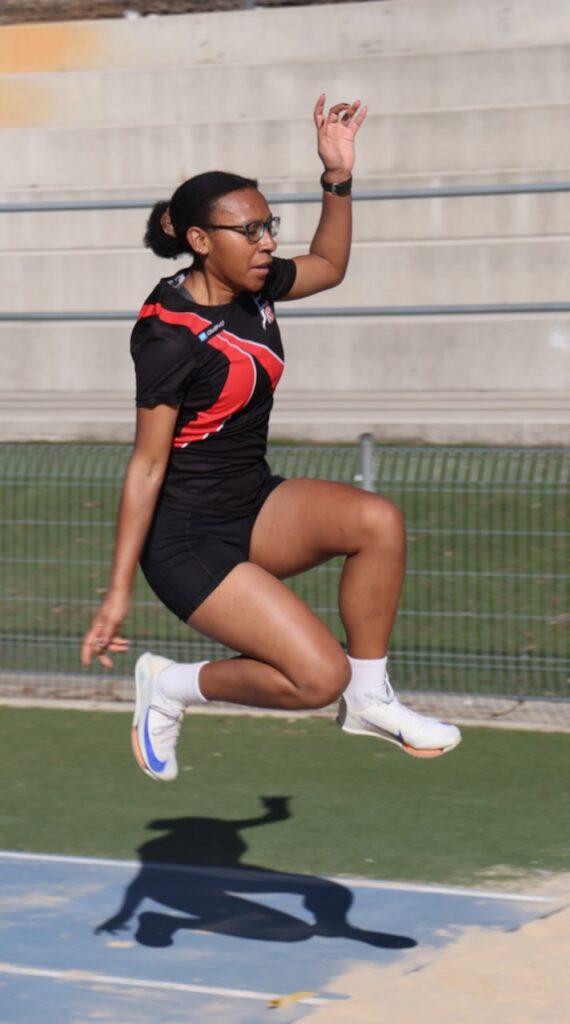
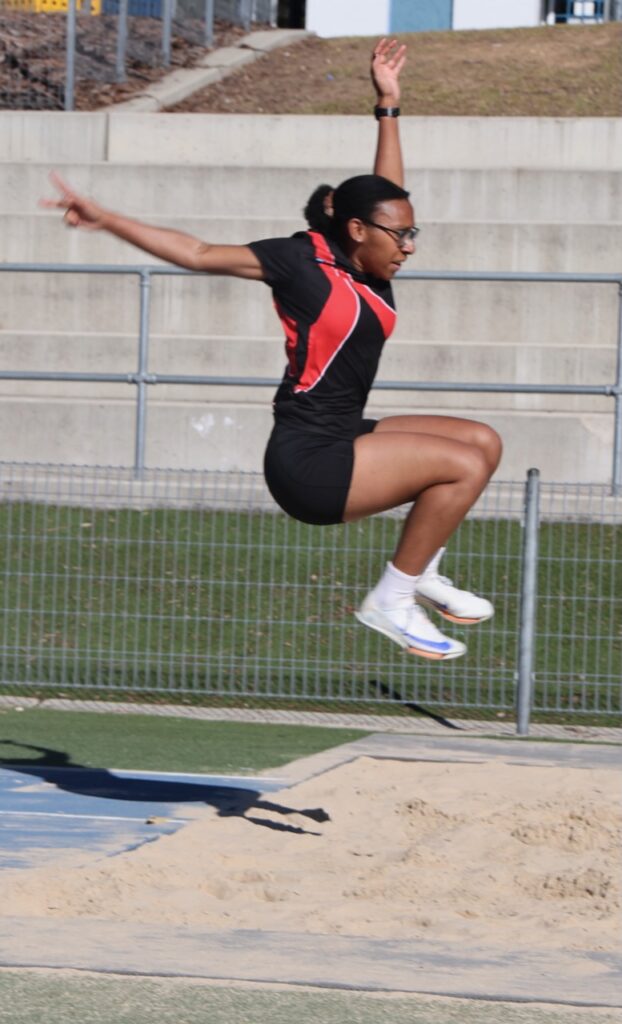
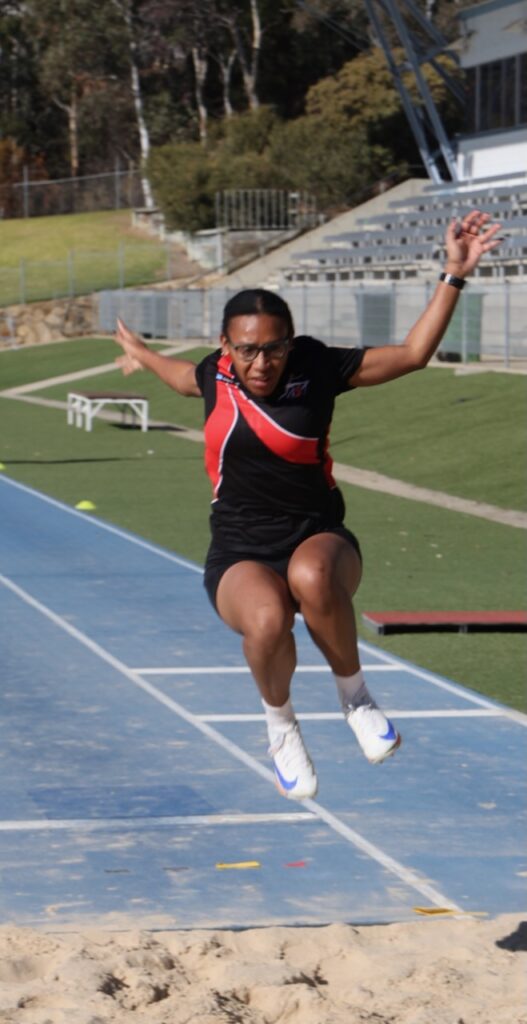
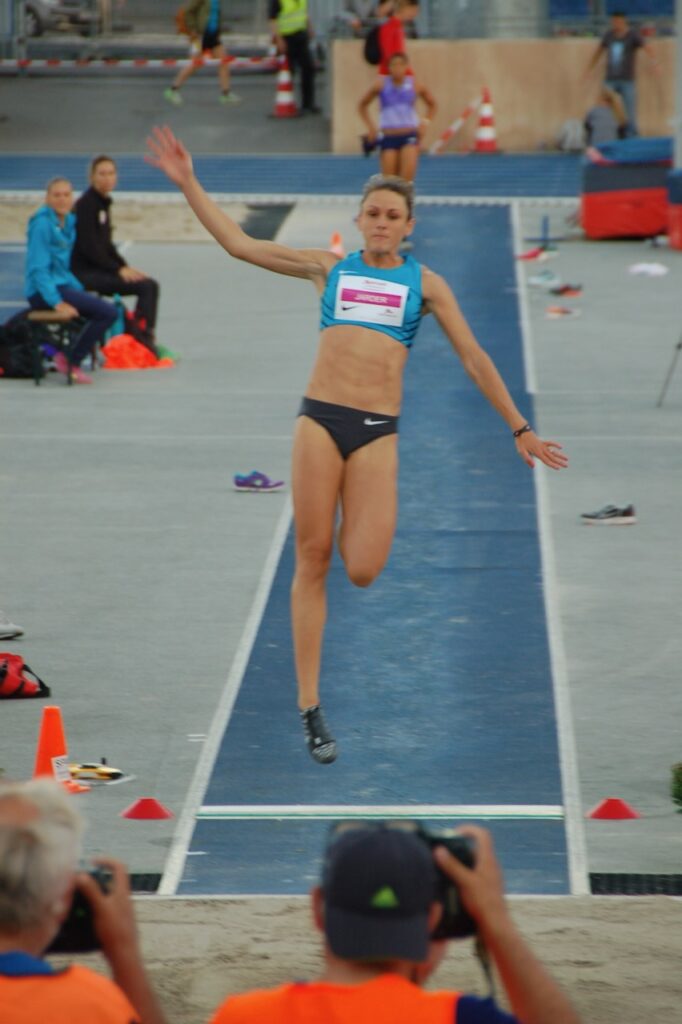
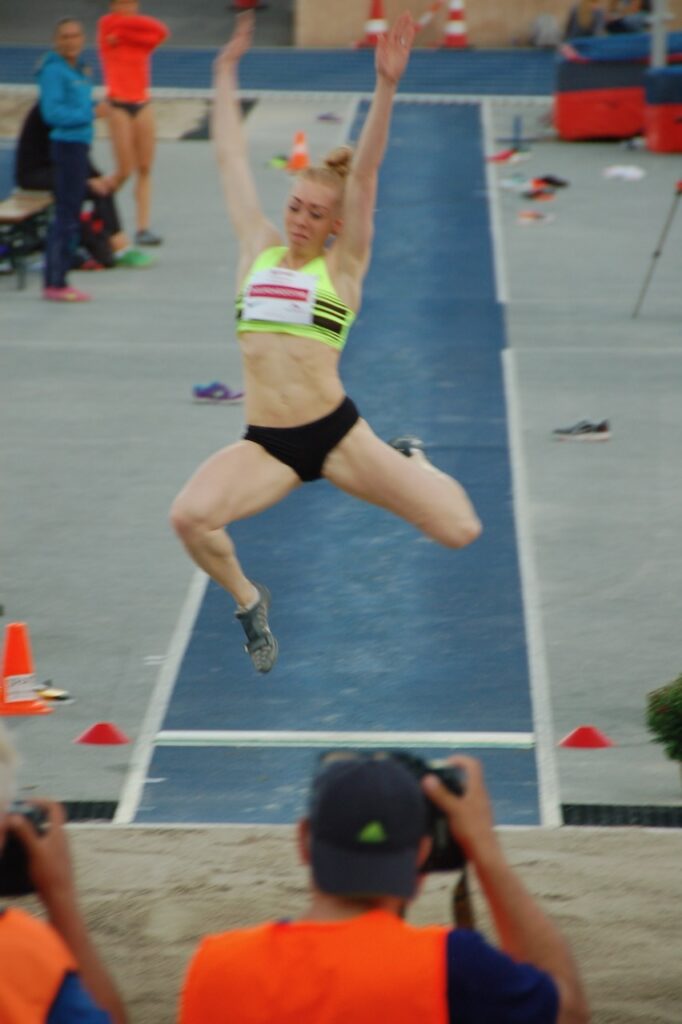
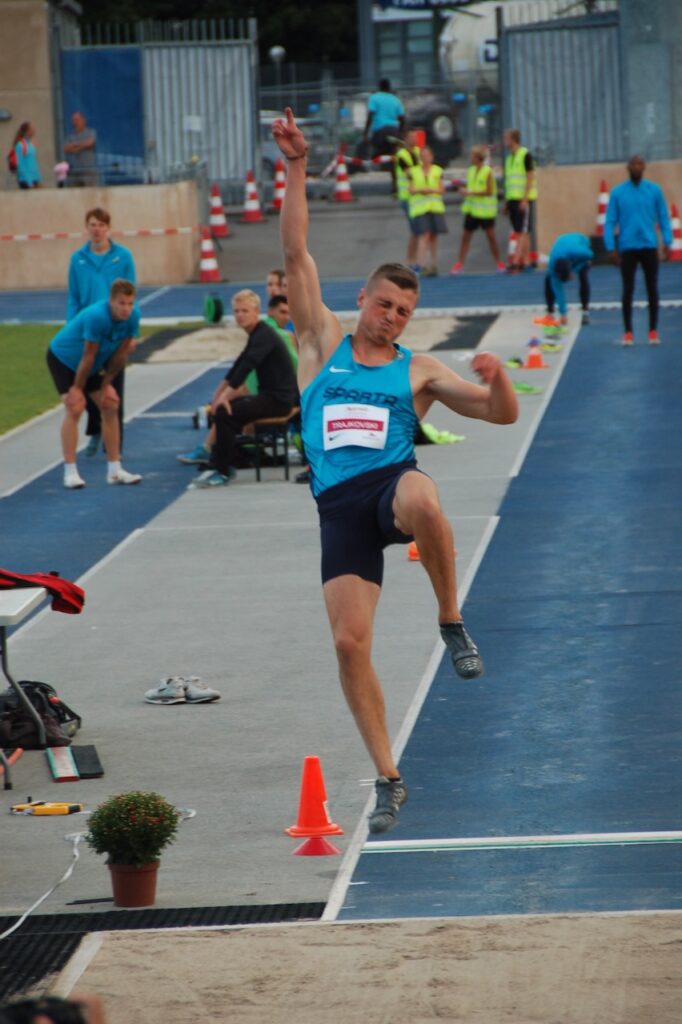
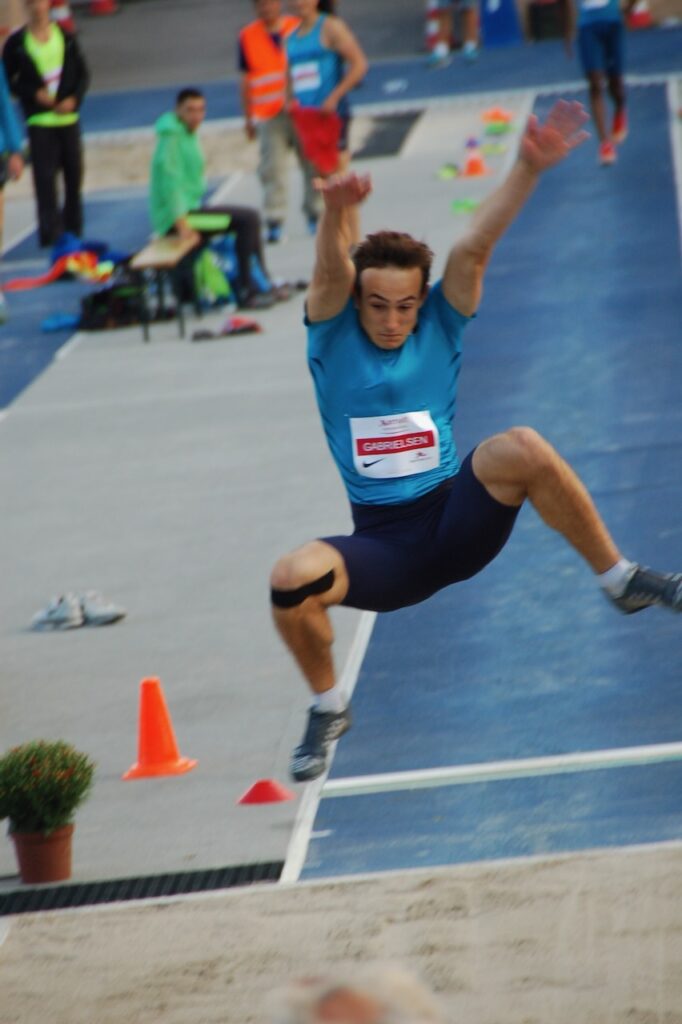
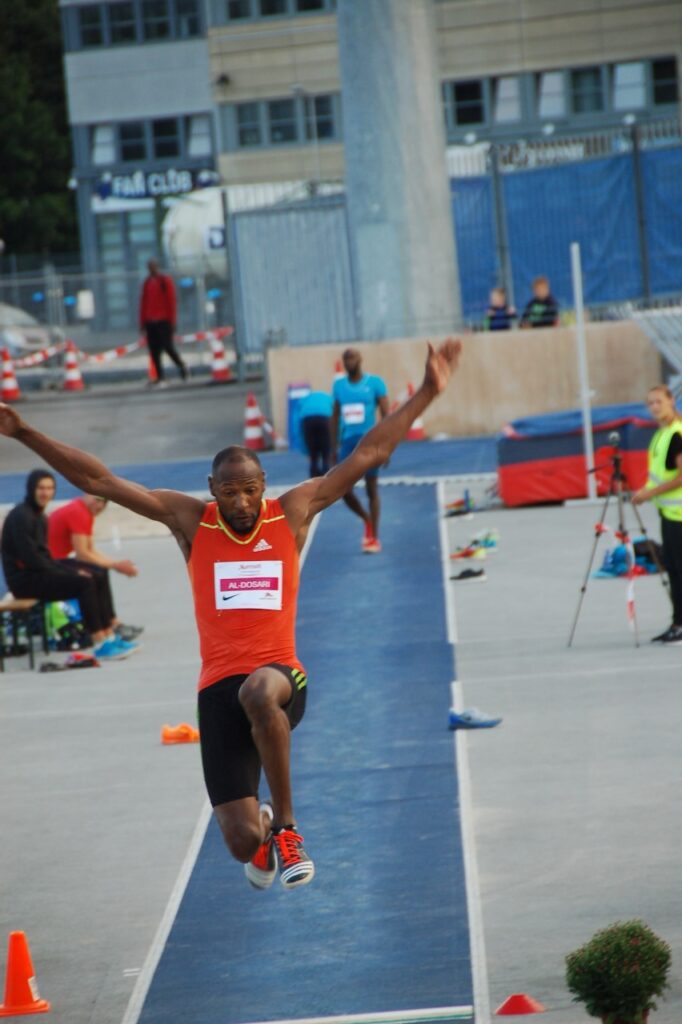
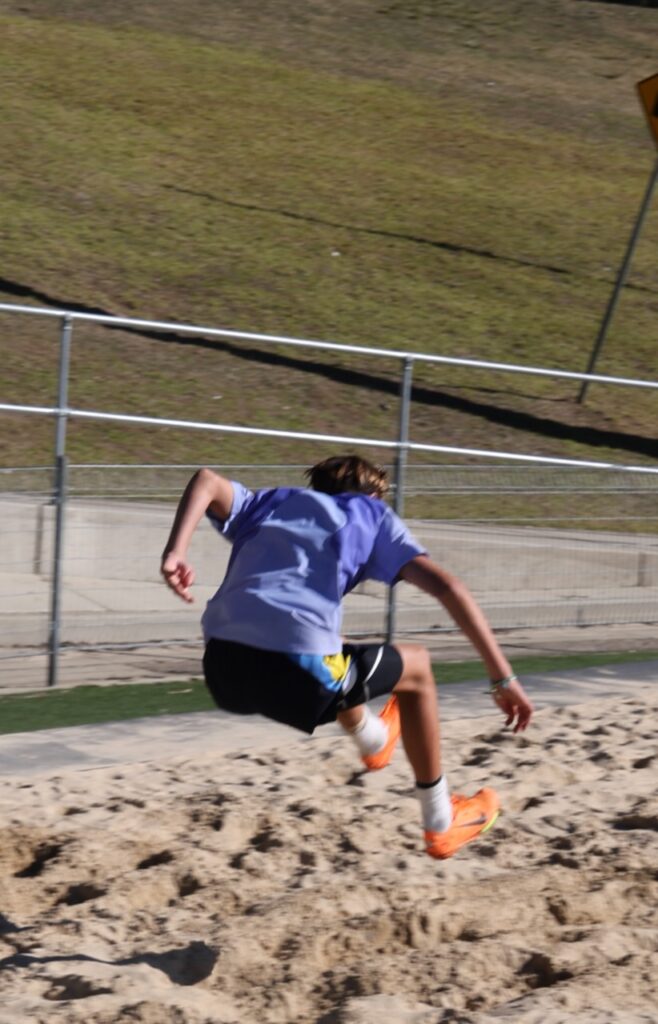
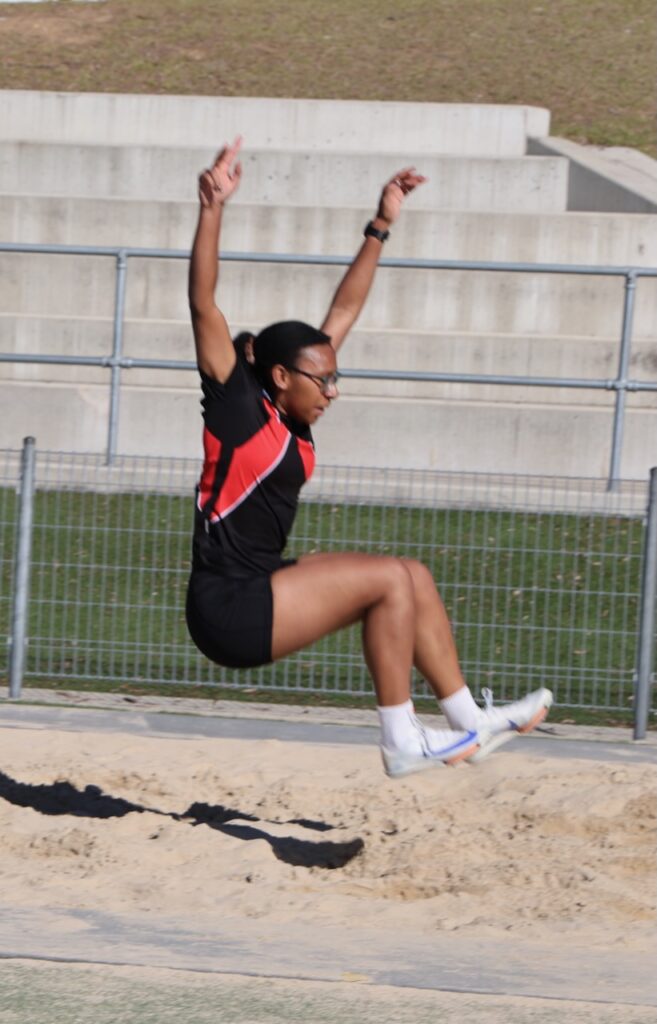
FLIGHT PHASE
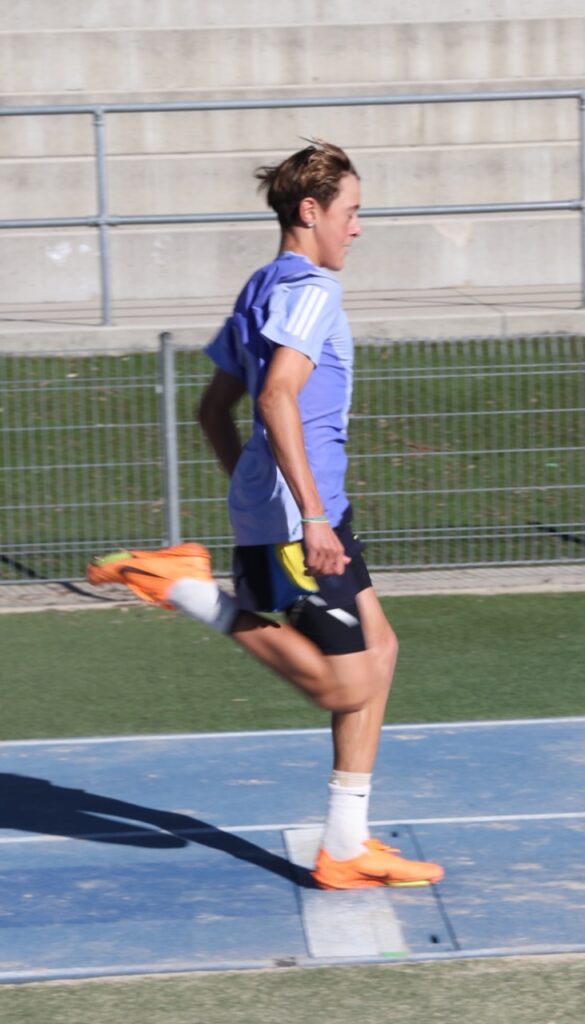
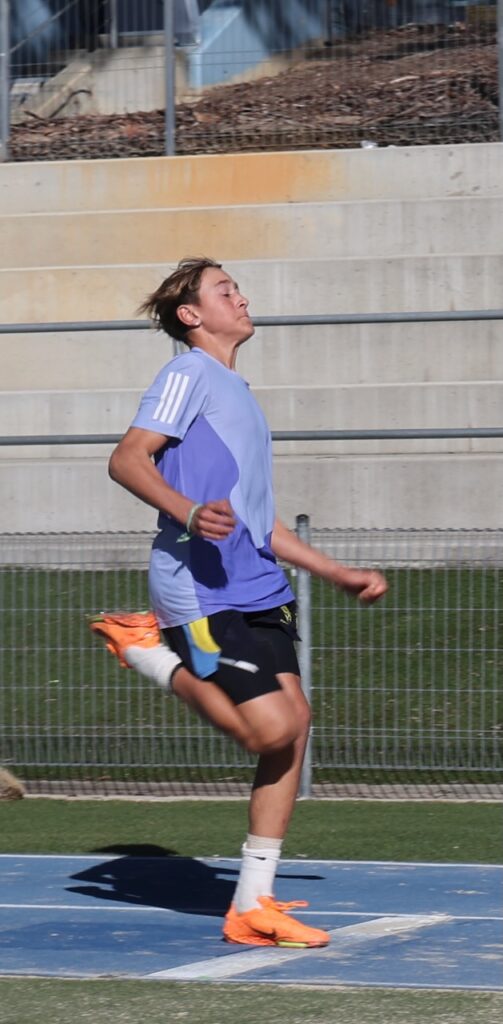
Goal: Maintain balance and position to maximize distance and set up a good landing.
Flight Techniques (choose based on ability and comfort):
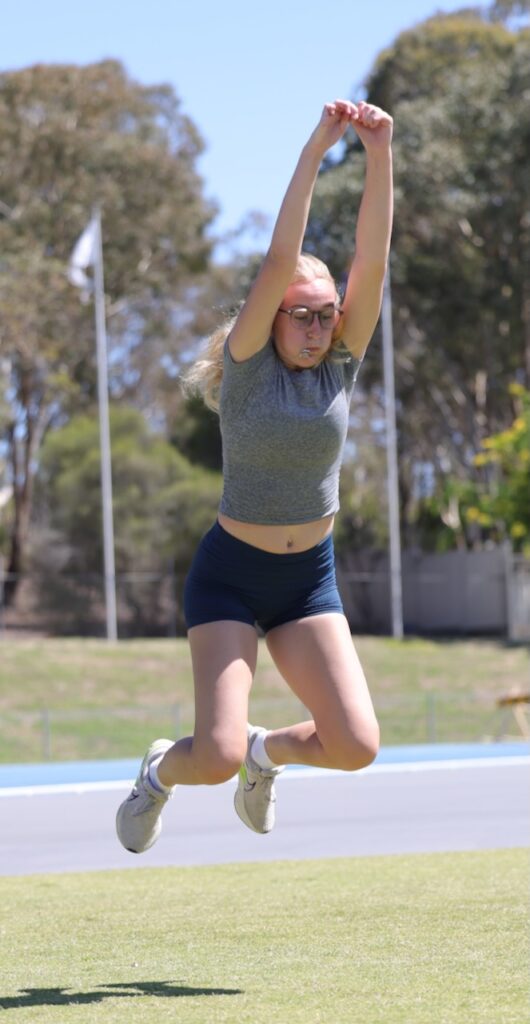
- Hang technique (Beginner–Intermediate):
- After take-off, arms stay high and body “hangs” in stretched position.
- Legs slightly extended behind.
- Great for developing athletes.
- Sail technique (Common at junior level):
- Swing leg drives high and is joined by the take-off leg for a split-second “floating” position.
- Minimal air movement — efficient, simple.
- Hitch-kick (Elite level):
- Running-in-the-air motion to counter rotation.
- More complex but ideal for high-speed take-offs.
✅ Key to success: Stay extended in the air, avoid forward rotation, and control body for landing.



LANDING
Goal: Land in the sand with maximum extension and minimal backward fall.
- Legs: Fully extended in front of the body.
- Arms: Sweep forward and up (to counterbalance leg drive).
- Head and chest: Stay forward — chin down, eyes level.
- Hips: High throughout flight and land beyond heels.
- Contact: Feet hit the sand flat or slightly heel-first.
- After landing: Collapse forward at the waist to avoid the butt dropping back into the sand.
✅ Key to success: Don’t let the hips drop — a strong, extended landing adds up to 30–40cm to the jump in elite athletes.


OPTIMAL PHASE RATIOS & TECHNIQUE MARKERS
| Phase | Best Practice |
|---|---|
| Run-up speed | 95–98% of max sprint speed |
| Take-off angle | 18°–22° |
| Flight time | 0.85–1.10 sec (varies with level) |
| Landing extension | Legs out, hips high, head forward |
COACHING CUES (External Focus Examples)
- “Drive through the board, not into it.”
- “Swing the knee to the sky and fly.”
- “Stretch and hang it out in the air.”
- “Land long, chin down, reach forward.”
COMMON FAULTS TO AVOID
| Fault | Description |
|---|---|
| Overreaching in penultimate step | Causes braking and loss of rhythm |
| Leaning back on take-off | Limits vertical lift and disturbs balance |
| Tucking legs too early in flight | Shortens flight arc |
| Butt dropping in landing | Major cause of lost distance |
| Inconsistent run-up | Most frequent technical breakdown |
Comments are closed