

At FAST Running, the warm-up is not something athletes do before training.
It is part of the training.
That distinction matters.
In many sporting environments, warm-ups are treated as a formality. A few laps, some stretches, a couple of drills — and then the “real session” begins.
But sprinting does not work that way.
Speed is technical.
Posture matters.
Rhythm matters.
Force direction matters.
How an athlete moves during the warm-up often determines how they will move once the session intensity rises.
Building Movement Before Speed
Every movement within the FAST warm-up has a purpose.
Dribbles help athletes organise rhythm and foot strike.
Wall drills reinforce projection and acceleration angles.
Bounding develops stiffness, timing, and elastic force transfer.
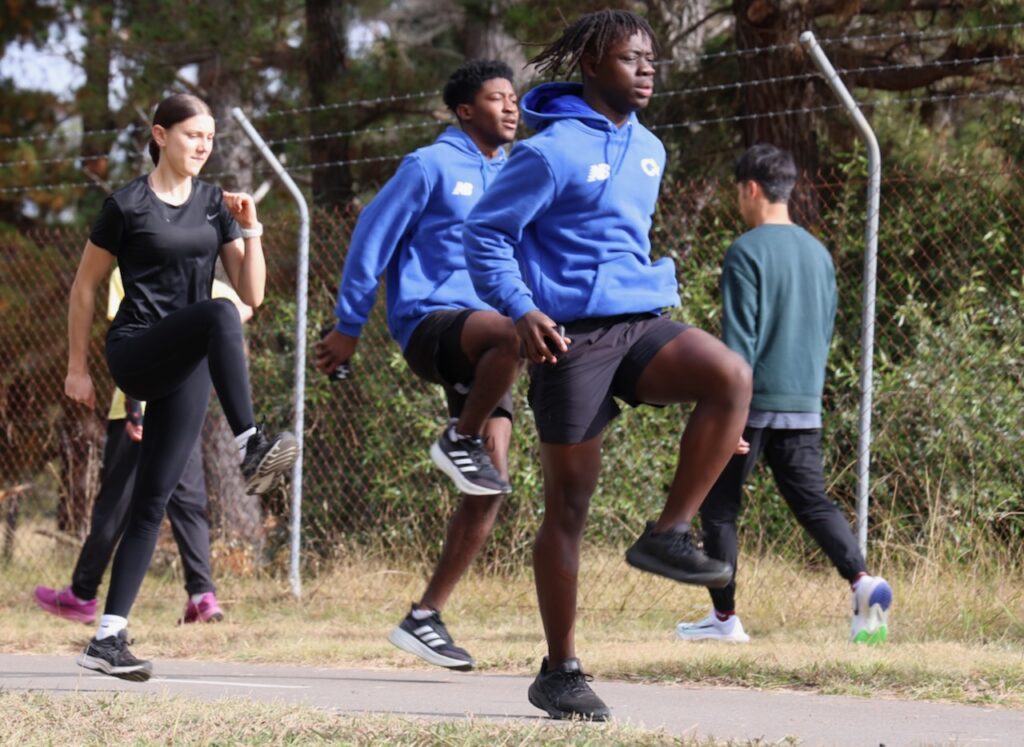
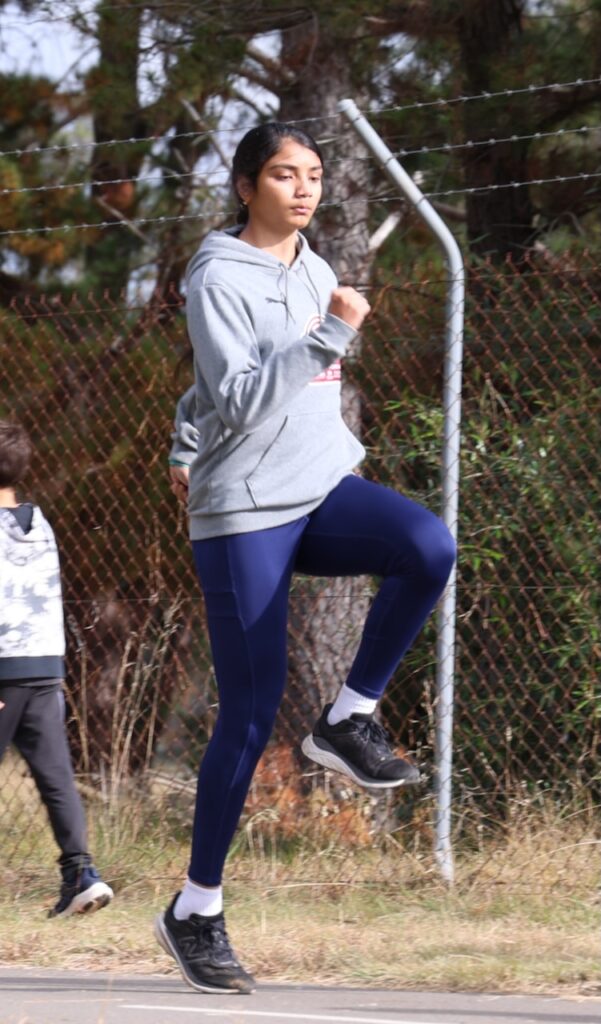
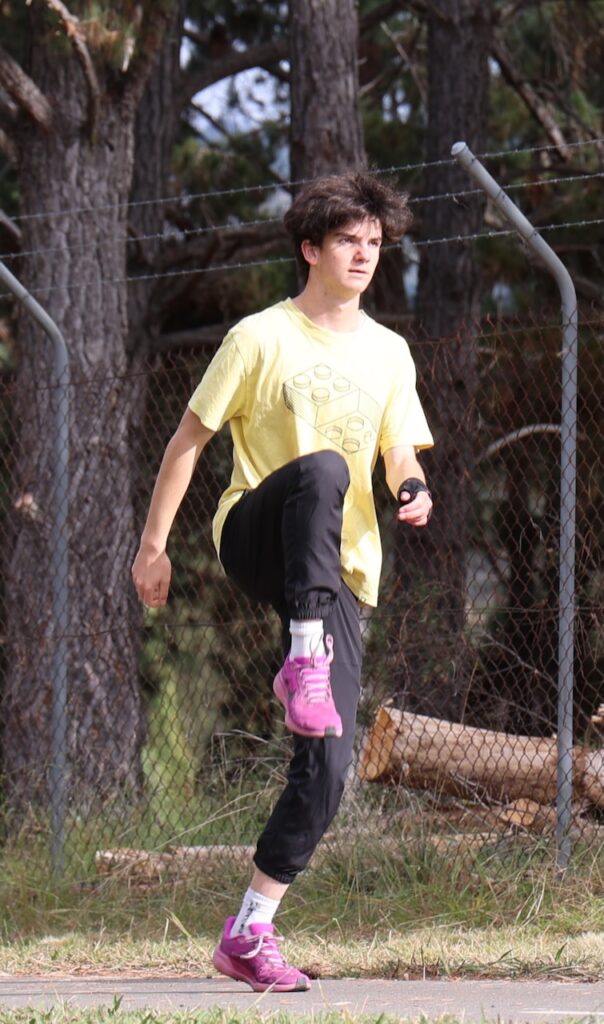
Skipping patterns teach posture and coordination.
Pogos reinforce ankle stiffness and reactive qualities.
Straight-leg runs help athletes understand front-side mechanics and ground contact timing.
Even the order of the warm-up matters.
Athletes progressively move from general movement into posture and rhythm work, then acceleration preparation, stiffness activities, projection mechanics, and finally sprint-specific movement before high-speed running begins.
The goal is not simply to “get warm.”
The goal is to prepare athletes to sprint fast correctly.
Why This Matters
Fast running magnifies technical weaknesses.
Poor posture becomes more obvious.
Over-striding becomes more costly.
Inefficient arm action disrupts rhythm.
Loss of stiffness reduces force transfer.
A rushed transition destroys projection.
The warm-up allows coaches to identify and correct many of these issues before the main session even begins.
At FAST Running, coaching starts from the first movement of the session.
One System Across Every Group
One of the strengths of the FAST system is that athletes across different groups often share the same movement language and preparation structure.
FAST Start and FAST Kids athletes begin learning rhythm, posture, and coordination early.
FAST Accelerate athletes build movement efficiency and sprint mechanics progressively.
FAST Track and FAST Performance athletes refine increasingly advanced sprint qualities using the same broader system.
That consistency helps athletes develop long-term confidence and understanding.
It also creates a strong culture within the squad.
Younger athletes see older athletes performing the same drills with focus and intent.
Older athletes reinforce standards for the next generation.
Readiness, Not Fatigue
Importantly, the FAST warm-up is not designed to create fatigue.
It is designed to create readiness.
Athletes should leave the warm-up feeling:
- switched on
- coordinated
- elastic
- rhythmical
- prepared to sprint fast
This reflects the broader FAST philosophy of Running Excellence.
Movement quality matters.
Preparation matters.
Consistency matters.
Details matter.
More Than Injury Prevention
The warm-up also plays a major role in reducing injury risk.
Consistent exposure to posture work, stiffness drills, acceleration mechanics, and coordinated movement patterns helps prepare athletes for the demands of high-speed sprinting over time.
At FAST Running, efficient movement is viewed as both performance development and injury prevention.
The two are connected.
The Session Begins Here
At FAST, athletes are not simply told to warm up while waiting for the “real training” to begin.
The warm-up is where the session starts.
Coaching begins there.
Learning begins there.
Standards begin there.
And often, performance improvements begin there too.









Comments are closed