
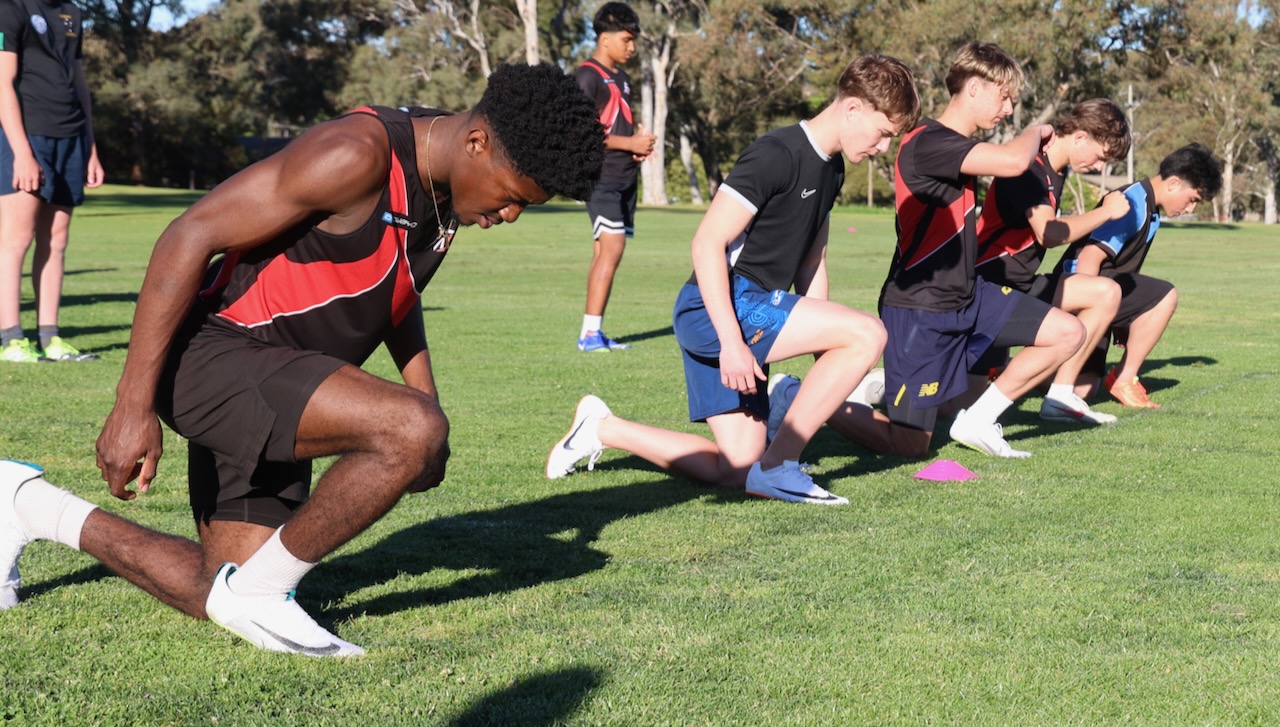
He gave himself ten weeks to break 11 seconds. Now Daniel Nwaobi is discovering just how far his sprinting can take him.
When Daniel Nwaobi first set himself the challenge of breaking 11 seconds for the 100m, he wasn’t interested in making gradual progress over several seasons. He wanted to achieve something significant, and he gave himself just ten weeks to do it.
That ambition became the foundation of one of the most focused training periods we’ve seen at FAST Performance. Daniel committed himself to the work required, learning that sprinting faster wasn’t simply a matter of trying harder. It meant improving how he accelerated, how he moved at maximum velocity, how he prepared his body and how consistently he could reproduce those qualities in training.
Our original story, From Chasing 11s to Smashing Them — Daniel’s 10.88s Statement, captured an athlete who had already achieved what he initially set out to do. His 10.88-second performance represented an important breakthrough, but perhaps the most significant development was the change in what Daniel believed he could achieve.
Now he’s taken another substantial step forward.
At the Capital Athletics Summer Series on 7 November, Daniel won the men’s 100m in 10.60 seconds, following an equally impressive 6.95-second victory over 60m. The 100m was assisted by a +4.7 m/s tailwind, meaning it cannot be recognised as a wind-legal personal best, but it remains his fastest recorded performance over the distance and another important milestone in his development.
Daniel now sits second on FAST Running’s all-time men’s 100m rankings, with Vivian’s leading mark increasingly close. For an athlete who began this journey determined to break 11 seconds, finding himself challenging the fastest performances in FAST history represents a remarkable progression.
The Work Behind the Time
There’s a temptation to look at a result like 10.60 and focus entirely on the number. But Daniel’s development has involved considerably more than a series of increasingly fast performances.
Throughout his time with FAST, we’ve worked on building the technical foundations needed to support high-level sprinting. Acceleration mechanics, maximum velocity development, strength, coordination and the ability to maintain efficient movement under pressure have all contributed to his progress.
Just as importantly, Daniel has learned that performance development isn’t always straightforward. Like many sprinters, he’s had to manage physical challenges, particularly involving his hamstring, and recognise the importance of balancing demanding training with recovery and appropriate rehabilitation.
Those experiences have required patience and a willingness to make adjustments when necessary. Sometimes the most productive decision is to reduce a session, change an exercise or spend additional time restoring the physical qualities that allow an athlete to sprint confidently.
For Daniel, becoming faster has also meant becoming more aware of his body and more responsible for the work that happens away from the track.
A Different Kind of Challenge
Breaking 11 seconds was once the target. Running 10.60, even with wind assistance, changes the conversation.
At this stage, the challenge isn’t simply to chase another faster number. It’s to develop the consistency, resilience and technical execution required to produce high-quality performances under different competition conditions.
A wind-assisted performance tells us something about an athlete’s capabilities, but the next important step is translating that speed into legal conditions and ultimately delivering it when it matters most.
With the Australian All Schools Championships approaching in December and the national championship season ahead in April, Daniel has important opportunities to continue that development. The priority remains preparing an athlete who can train consistently, compete confidently and maintain his physical condition throughout a demanding season.
His progress also reflects the value of having strong training partners. Alongside athletes such as Sam Blood, Daniel works in an environment where high standards are reinforced every session and improvement is something the group pursues collectively.
Beyond the Original Goal
When Daniel first gave himself ten weeks to break 11 seconds, it was a bold target. Achieving it demonstrated what focused preparation could accomplish, but it also opened the door to possibilities that may once have seemed distant.
His latest 10.60-second performance doesn’t represent the end of that journey. Instead, it provides another indication of the speed he’s developing and the standards he’s now capable of challenging.
The most exciting part of Daniel’s progress is that his understanding of sprinting continues to grow alongside his performances. He’s learning that long-term success depends not only on how fast he can run on a particular day, but on how well he prepares, adapts and develops from one training block to the next.
The athlete who once chased 11 seconds is now looking towards an entirely different level of performance.
And the work continues.
Running Excellence.
Comments are closed