
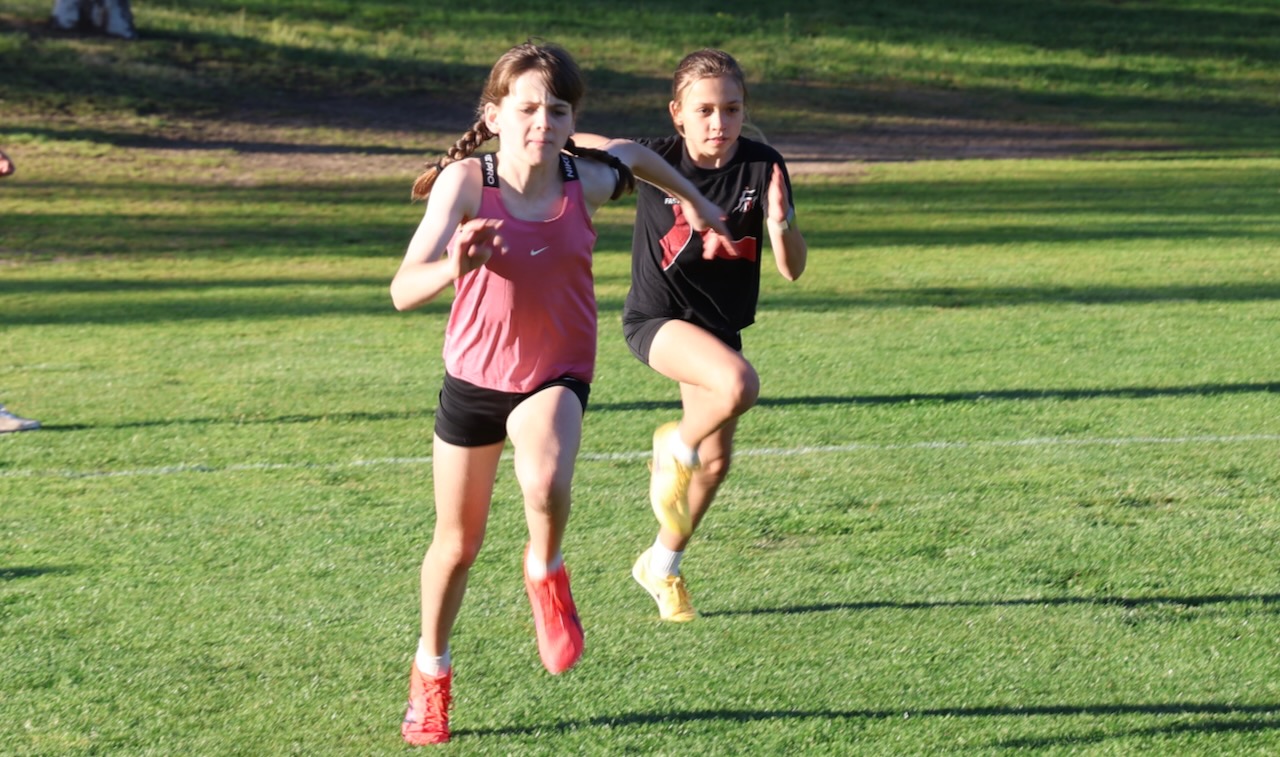
A new generation of FAST Kids is shaking up 20–30 years of sprint rankings. And the 400m might be where things get really interesting.
When children first arrive at FAST Kids or one of our Accelerate school holiday clinics, making the FAST all-time Top Ten probably isn’t high on their list of priorities.
They want to run. They want to have fun. They want to make friends, learn something new and perhaps beat somebody to the finish line.
Fair enough. That’s exactly what we want too.
But something rather exciting is happening.
We’ve been revisiting our historical FAST Top Ten performances, and our youngest athletes are making quite an impression.
Across the 9–10 years rankings, a new generation is already claiming places among athletes whose performances span two to three decades. Depending on the event, three or four of the boys and four or five of the girls represent this emerging generation.
And these aren’t just any historical lists. They’re a who’s who of FAST and ACT athletics talent, featuring athletes who went on to become ACT record holders and national champions.
Not bad for a group of kids who came along to have some fun!
Nobody arrived wearing a ‘future champion’ label
Here’s something we think is particularly important.
These children weren’t recruited because somebody had identified them as exceptional sprinting talents. They weren’t selected from a group of promising athletes and invited into a special development squad.
They joined FAST to learn, enjoy running and see what they could do.
That’s how we want it.
We believe children deserve quality coaching before anybody knows how good they might become. They shouldn’t have to demonstrate exceptional speed at nine or ten to earn the opportunity to develop it.
Our coaches teach children how to accelerate, sprint and move effectively. We introduce challenges, games, technical skills and opportunities to compete, always with the understanding that children learn best when they enjoy what they’re doing.
Some progress quickly. Others take longer to find their rhythm.
And sometimes, without anybody making a particularly big fuss about it, a child starts running times that belong among the best we’ve recorded.
We don’t think that’s entirely a coincidence.
It’s what we hope to see when good coaching, consistent opportunities, a supportive community and enthusiastic young athletes come together.
Hang on. Who’s in the 400m?
One of the most interesting surprises in our youngest rankings isn’t necessarily in the 100m.
It’s the 400m.
Our emerging generation is particularly well represented over one lap, and that has certainly caught our attention.
At nine or ten, most children understandably enjoy shorter races. The 400m is a different adventure altogether. There’s speed involved, but also rhythm, judgement and the challenge of keeping things together as the distance unfolds.
We’re not about to start declaring the next generation of Australian 400m champions. That would be getting well ahead of ourselves.
But we are curious.
As these children move into their early teenage years over the next two to four years, will some discover a real affinity for the one-lap sprint? Will their developing speed and running skills translate into increasingly competitive 400m performances?
Perhaps.
Others may turn out to be excellent 100m or 200m runners, hurdlers, jumpers or athletes in completely different sports.
That’s part of the fun of coaching young athletes. We don’t know the ending, and we don’t need to write it for them.
For now, the 400m rankings have given us another interesting group of athletes to watch develop.
What if your child isn’t fast yet?
Now for the other side of this story, because it’s every bit as important.
Some children are fast at nine. Some become fast at thirteen. Others make their biggest improvements much later.
And some simply enjoy running without ever wanting to become competitive athletes.
All belong in our community.
Our FAST ACT Development Study, which examined ten years of ACT school athletics results, gives us valuable insight into how young athletes progress. It shows that early performance can be meaningful, but development is far from uniform and early success doesn’t determine an individual’s eventual achievements.
That matters when we look at our Top Ten.
The children entering the rankings today deserve to celebrate. They’ve earned those places.
But the child who is still learning how to accelerate, struggling to coordinate their arms and legs, or finishing behind everybody else hasn’t somehow missed their opportunity.
They might be at the very beginning of their development.
And that’s an exciting place to be too.
We don’t want to know only who is fast today.
We want to help every child discover how much they can improve.
The names on the list keep changing
There is something special about connecting today’s young athletes with those who trained at FAST years, or even decades, before them.
Some of the names in our historical rankings went on to achieve remarkable things. They established standards that have lasted for years and gave future athletes something to chase.
Now children from FAST Kids and Accelerate are beginning to challenge some of those performances.
That’s exactly what we want to happen.
In a few years, perhaps we’ll be celebrating these same athletes in our teenage rankings. Perhaps another group of ten-year-olds will arrive and start chasing their times.
And perhaps some of the children currently learning their first acceleration drills will surprise all of us.
That’s the beauty of having a development pathway that starts with enjoyment and can grow with the athlete.
FAST Kids, FAST Accelerate, FAST for Sport, FAST Track and FAST Performance aren’t separate ideas about who deserves to be coached. They’re different ways of supporting athletes as their interests, abilities and ambitions develop.
So, what’s next?
More running. More learning. More laughter. More opportunities to get faster.
And probably a few more changes to those Top Ten rankings.
We’ll keep celebrating the children who earn their place in FAST history, just as we’ll keep encouraging those who are only beginning their journey.
Because the best thing about coaching young athletes isn’t knowing who will become a champion.
It’s discovering what happens when you give them the opportunity.
They came to have fun. They’re learning to run fast. And now they’re writing their own piece of FAST history.
Not a bad start.
Comments are closed