
From learning how to land to developing speed, take-off and technique, there’s a lot more to horizontal jumping than running down a runway and landing in the sand.
If you’ve ever watched a long jump or triple jump competition, you could be forgiven for thinking the objective is fairly straightforward. The athlete runs down the runway, takes off, travels through the air and lands in the sand. The distance is measured, and everyone gets ready for the next attempt. But behind those few seconds of competition is a collection of skills that take considerable time, practice and patience to develop.
At FAST Running, our horizontal jumps sessions are built around four connected areas: Foundation, Speed, Jump Specific, and Technique and Skill. Each contributes something different to an athlete’s development, and together they provide a structure that allows us to introduce new skills progressively rather than expecting athletes to master the complete jump from the outset.
Sunday’s FAST Accelerate session provided a good example of how this works. Two of our younger athletes spent time developing their landing and take-off skills, progressing from simple activities involving a step to more complex movements using the high jump mat and long jump pit. To someone watching from the sidelines, some of these activities might not immediately resemble long jump or triple jump. That’s intentional, because we’re not simply trying to get athletes to jump further during a particular session. We’re helping them develop the skills they’ll need to become better jumpers over time.
Building the foundations
Foundation is where we develop the movement qualities that support everything else an athlete does. Balance, coordination, posture, rhythm and body awareness all influence how effectively someone can run, jump and land. These qualities are particularly important for younger athletes, who are still learning how to organise their movements and respond to different physical challenges.
In horizontal jumping, an athlete needs to manage their body position through several distinct phases, often while moving at considerable speed. They must coordinate their approach, prepare for take-off, produce an effective jumping action and then organise themselves for landing. If we introduce all of those demands simultaneously, it can be difficult for a developing athlete to understand what they’re trying to achieve or for a coach to identify which element needs attention.
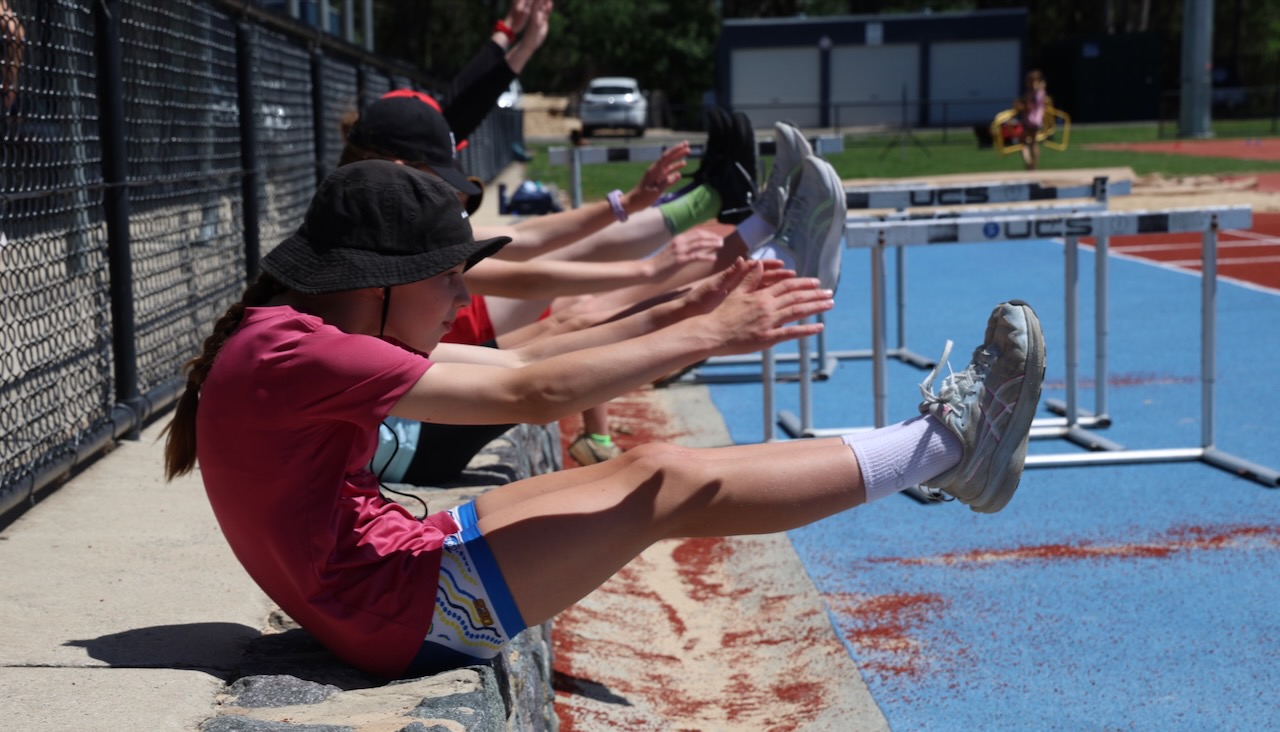
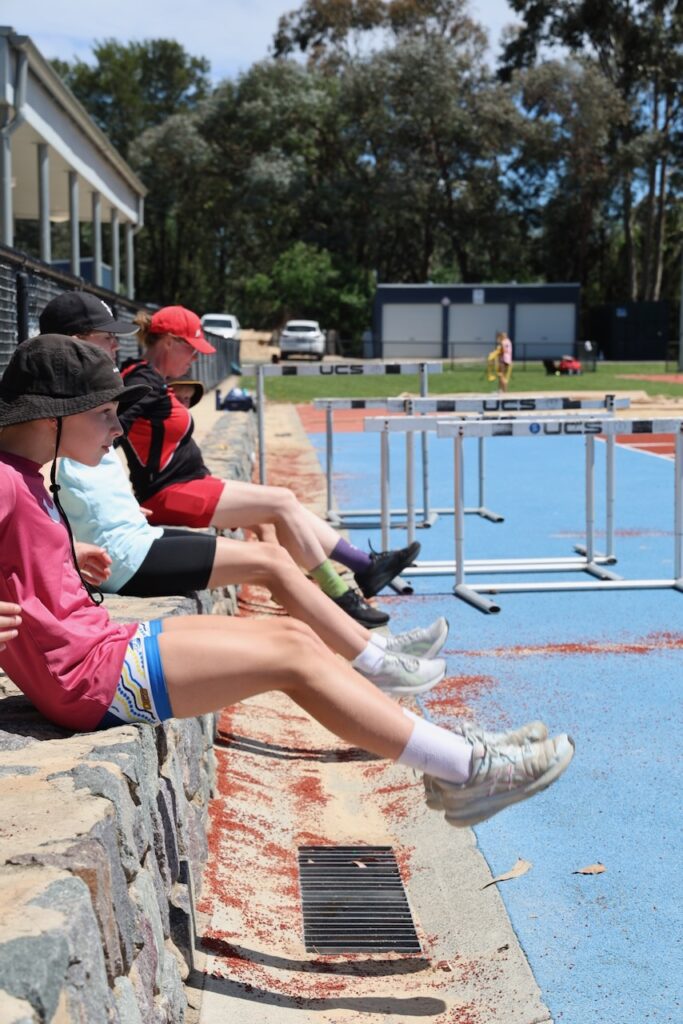
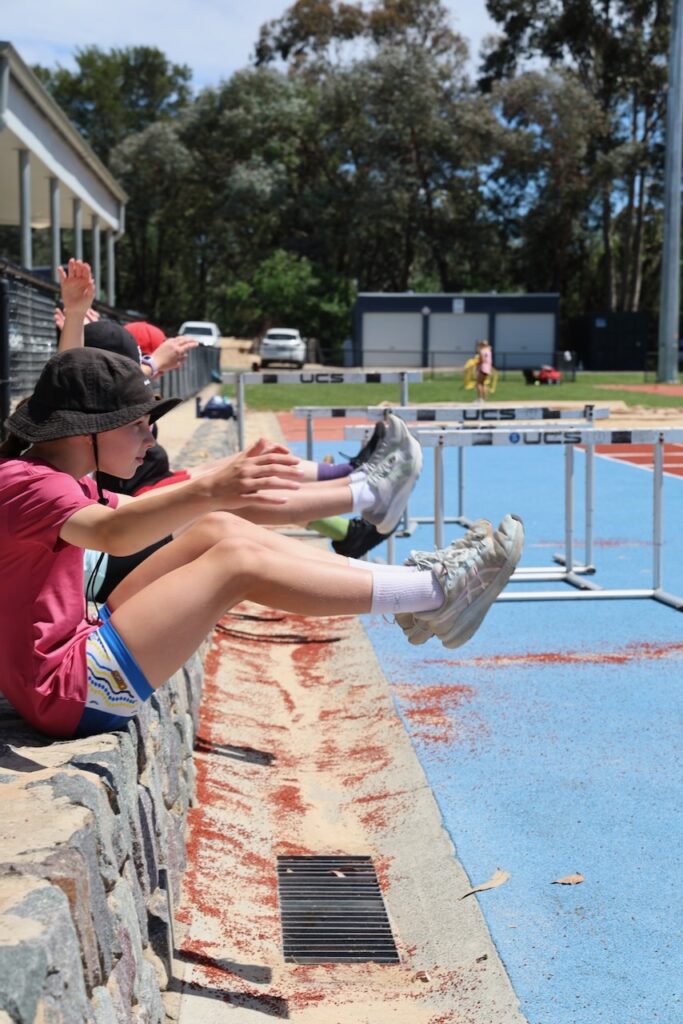
That’s why we sometimes begin with activities that remove much of the complexity. During Sunday’s session, our athletes practised landing from a seated position on a step, allowing them to concentrate on extending their legs forward and organising their body position as they entered the sand. Without the distraction of an approach or take-off, they could explore the landing movement, become more comfortable with the sandpit and receive feedback on a specific skill.
These activities also give us an opportunity to observe how athletes move, what they find difficult and how confidently they respond to new challenges. For FAST Accelerate athletes, that information is often more useful than simply measuring the distance of every jump.
Speed is part of the jump
One of the important connections between FAST Running’s sprint and horizontal jumps programs is speed development. Both long jump and triple jump depend on an athlete’s ability to generate and manage horizontal velocity, although the way that speed is used differs between the two events.
Our speed work develops acceleration, upright running mechanics and the ability to maintain effective positions as running velocity increases. These are skills we also teach in our sprint sessions, which means athletes can develop them across different training activities rather than treating jumping and sprinting as completely separate disciplines.
However, faster isn’t automatically better when an athlete is learning to jump. An approach needs to be consistent and controlled, with the athlete arriving at take-off in a position that allows them to use their speed effectively. A developing athlete who runs faster than they can manage may struggle to maintain their approach rhythm, prepare for take-off or coordinate the jumping action.
For that reason, we generally introduce approach speed progressively. Shorter approaches allow athletes to concentrate on rhythm, consistency and body position before we increase the distance or intensity. As their technical skills improve, they can begin carrying more speed into the jump without losing the movement qualities we’ve been developing.
This is an important part of our coaching approach. We don’t want athletes to become good at performing a drill only to lose those skills when they begin running faster. We want the technical development and speed development to progress together.
Learning the jump, one skill at a time
The jump-specific component of our sessions is where we begin connecting those foundations and running skills with the particular demands of long jump and triple jump. Depending on the athlete’s experience and the objectives of the session, we might concentrate on take-off mechanics, coordination, flight position, landing or the rhythm of the different jumping phases.
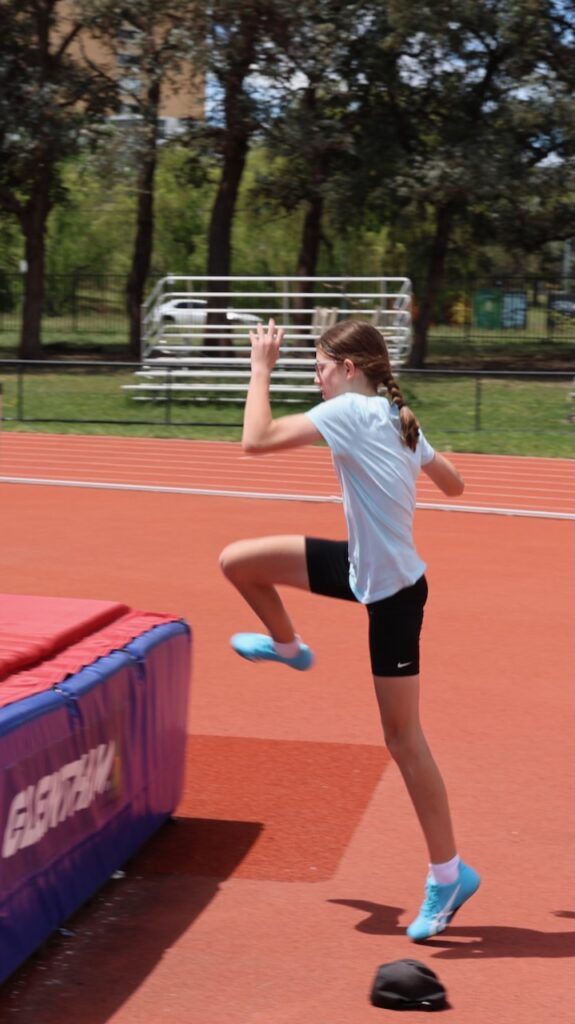
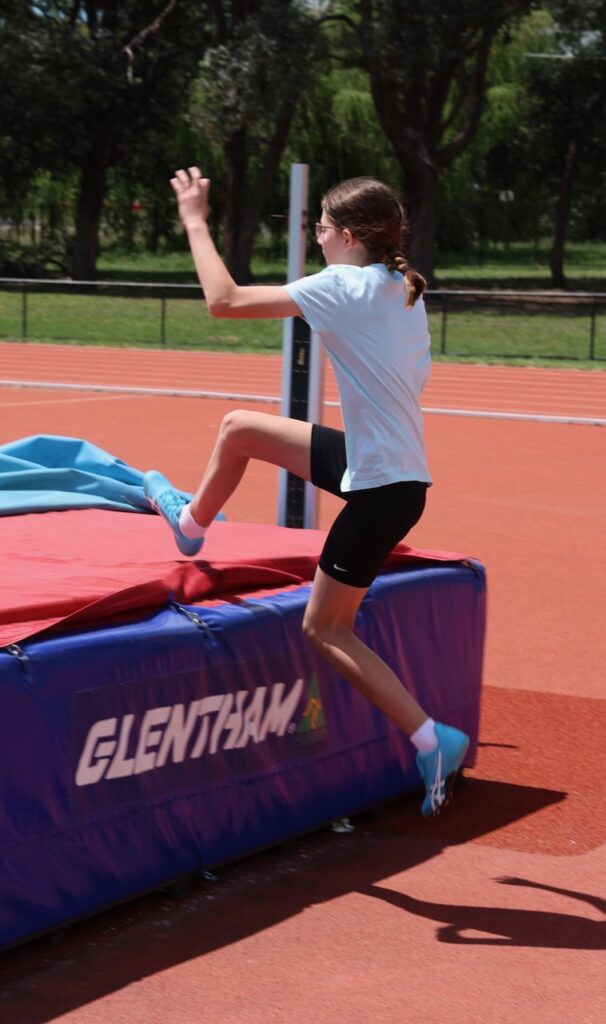
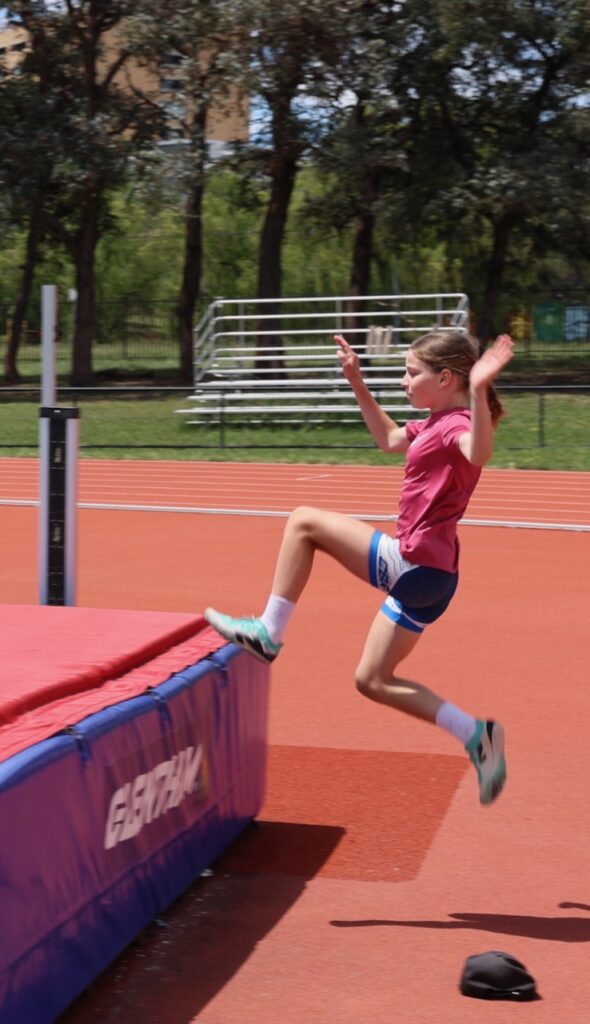
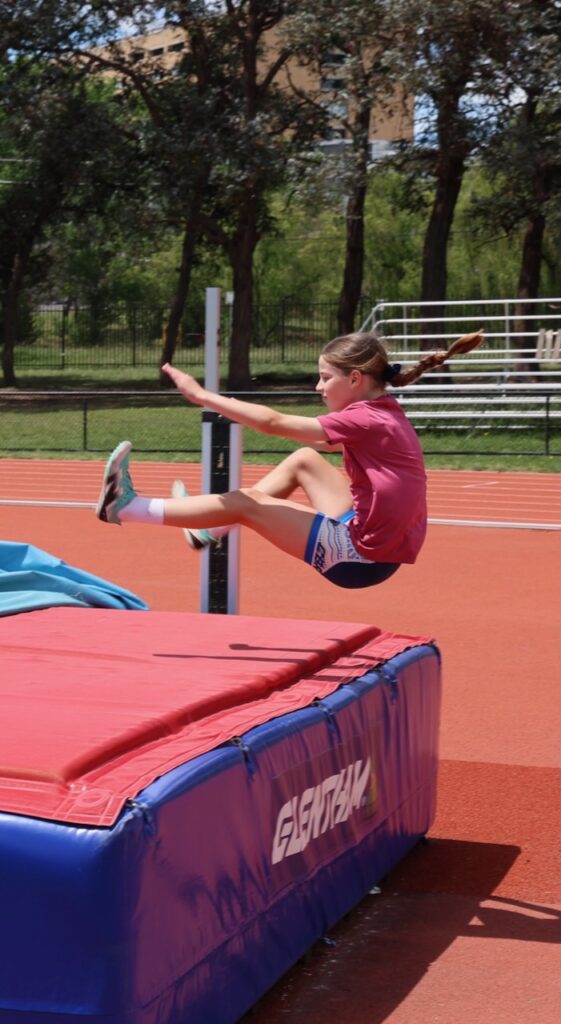
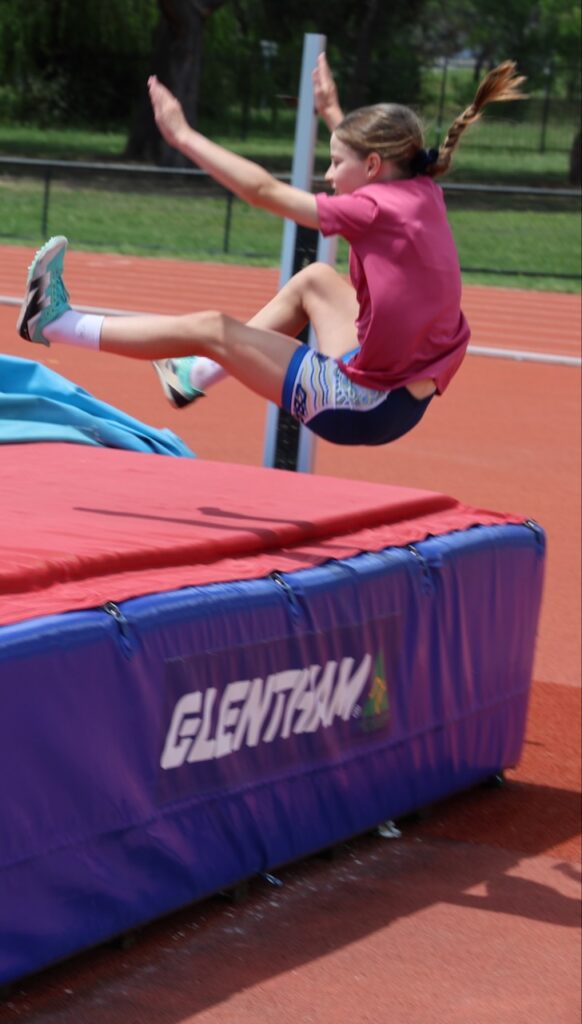
Sunday’s landing progression demonstrated how we can introduce these skills without immediately asking athletes to complete a full jump. After working from the seated position on a step, our athletes moved to landing activities using the high jump mat. This provided a different environment in which to explore their movement, practise coordinating their legs and body, and develop confidence with the landing action.
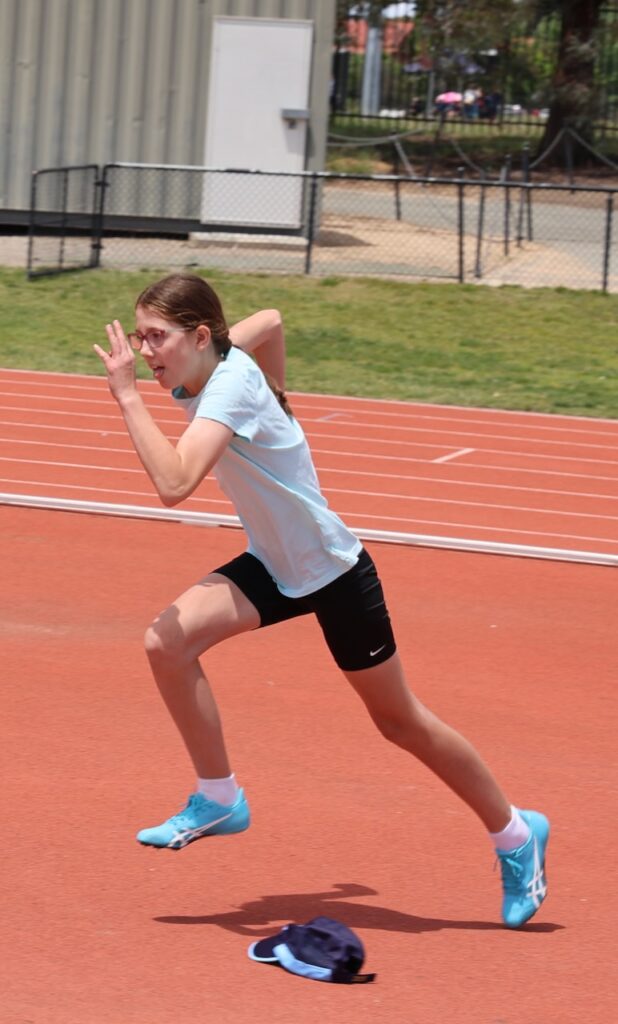
We then progressed towards take-off activities into the sandpit, introducing more of the jumping movement while still controlling the complexity of the task. By this stage, the athletes were beginning to connect the actions they had practised separately, rather than attempting to learn everything during a complete runway jump.
There is an important coaching principle behind this progression. When an athlete is learning a new skill, we want to provide enough challenge to encourage development without introducing so many demands that the quality of movement deteriorates. Sometimes that means reducing the approach distance, changing the landing environment or concentrating on a single part of the jump. At other times, it means combining skills that the athlete has already demonstrated they can perform confidently.
Landing is a particularly useful example because it’s easy to overlook when discussing horizontal jumping. We often concentrate on approach speed and take-off, but an athlete can produce an effective jump and still lose distance through poor landing mechanics. Learning to bring the feet forward, coordinate the movement of the legs and trunk, and manage the landing without falling backwards are all skills worth practising.
For younger athletes, there’s another consideration: confidence. Some athletes are naturally comfortable jumping into sand, while others need time to become familiar with the movement and landing environment. By introducing these skills progressively, we can help athletes become more confident without unnecessarily increasing the speed or complexity of the activity.
Putting the pieces together
The final component of our framework is Technique and Skill, where we progressively connect the different elements into the complete jumping action. This might involve short-approach jumps, work on the final steps before take-off, practising a particular flight action or bringing the approach, take-off and landing together.
Importantly, this isn’t always the final activity in a session, nor do we necessarily progress through the four components in a rigid sequence. Foundation work can be incorporated into the warm-up, speed development can reinforce technical skills, and jump-specific activities often overlap with technique work. The framework helps us understand what we’re developing and why, while allowing the session to respond to the needs of the athletes.
For our FAST Accelerate athletes, the emphasis is on developing movement skills, confidence and familiarity with different athletics events. We want them to enjoy learning, experiment with new movements and gradually become more capable athletes. As they progress into FAST Track and FAST Performance, we can introduce greater approach speeds, more demanding technical activities and increasingly individualised work.
The same underlying principles continue to apply, even as the level of performance increases. An experienced jumper may still return to a relatively simple landing or take-off drill when there’s a particular skill that needs attention. The difference is that the activity can be adapted to the athlete’s technical understanding, physical capabilities and competition requirements.
This is also why we don’t judge every horizontal jumps session by the distances achieved. Competition performances matter, and we certainly enjoy seeing athletes improve their personal bests, but training provides opportunities to develop skills that might not produce an immediate improvement in distance. An athlete may spend a session becoming more consistent with their approach, improving their take-off position or learning to land more effectively. Those improvements can contribute to better performances as their speed, strength and technical ability develop.
What Sunday’s session tells us about FAST
One of the things we enjoy about coaching younger athletes is seeing how much they can learn from activities that initially appear quite simple. Sunday’s session involved two FAST Accelerate athletes, a step, a high jump mat and a sandpit, yet those activities allowed us to explore several important elements of horizontal jumping.
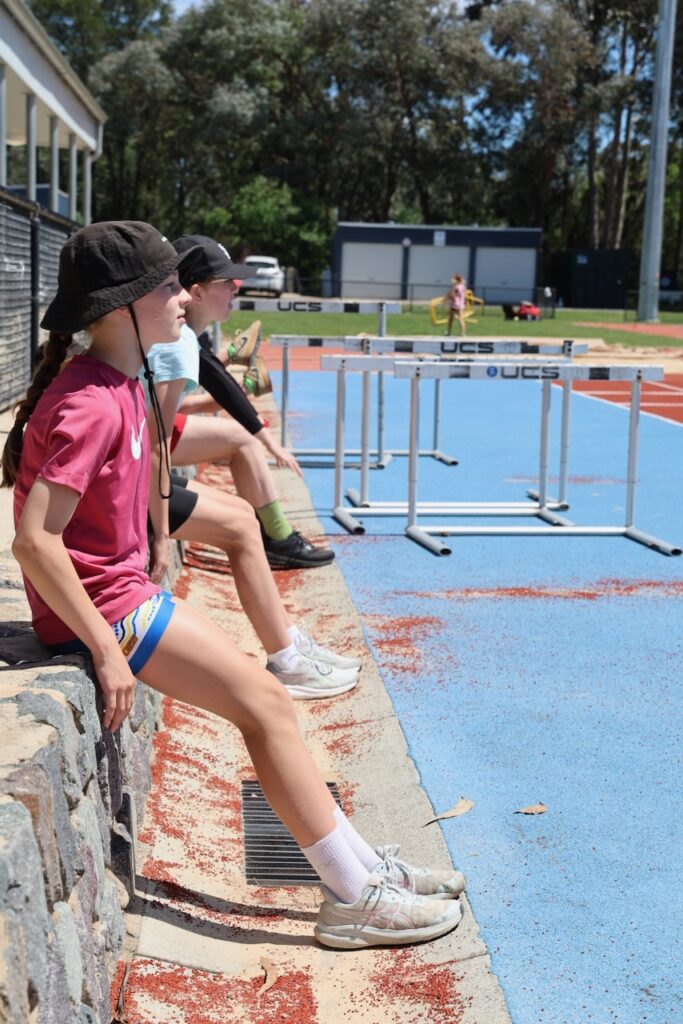
The photographs from the session capture that progression particularly well. They show athletes working on individual movements, developing confidence and gradually connecting the skills that contribute to a complete jump. They also provide a useful reminder for parents that what happens during training doesn’t always look like what they’ll see at a competition.
At FAST, we want athletes to understand that improvement comes from developing the skills behind the performance. Whether we’re coaching acceleration, maximum velocity, hurdles or horizontal jumps, our approach is to build sound foundations, introduce appropriate challenges and help athletes become more confident and capable as they progress.
For our younger jumpers, that might begin with learning how to land from a seated position. Over time, those same athletes may be running down a full runway, carrying greater speed into take-off and producing jumps they wouldn’t have imagined when they first started.
The connection between those two experiences is what makes the development process so rewarding. We get to see athletes learn something new, become more confident and gradually put together skills that once seemed difficult.
And sometimes, the first step towards a better long jump isn’t a jump at all.
Running Excellence grows
Comments are closed