
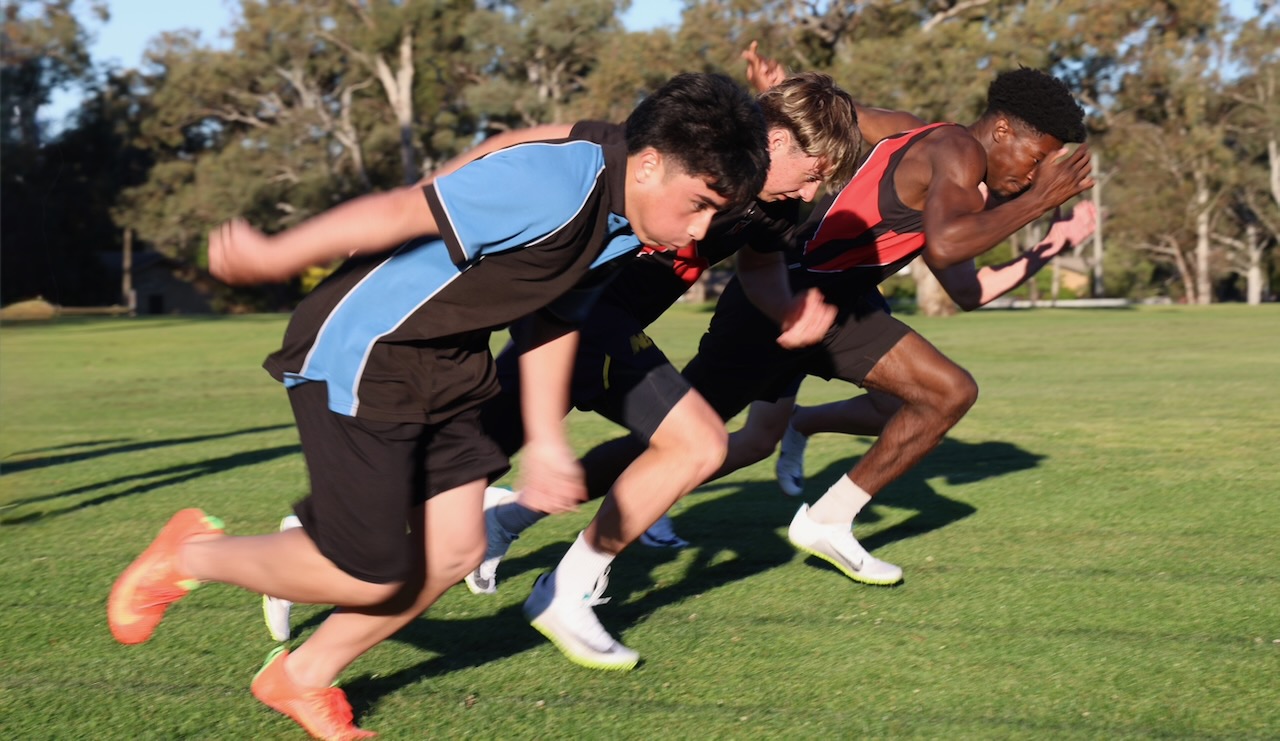
He had never competed in track and field, never represented his school at Regionals or the ACT Championships, and began training in borrowed spikes. Now Aqlan Taufik is winning races, setting personal bests and working towards a place at the Australian Athletics Short Track Championships.
Every athlete has a starting point, but not everyone arrives at athletics through the traditional pathway of school carnivals, regional championships and representative teams. Some discover the sport much later, without a collection of medals, personal bests or years of competition experience behind them.
For FAST Running’s Aqlan Taufik, that starting point was a borrowed pair of running spikes, plenty of enthusiasm and a determination to find out just how fast he could become.
Before joining FAST, Aqlan had never competed in track and field. He hadn’t progressed through school regional championships or represented his college at ACT level, and he had none of the competition experience that many athletes his age had accumulated over several seasons. What he did have was natural speed, an eagerness to learn and a level of motivation that quickly became apparent to those coaching him.
His journey is a reminder that athletic potential doesn’t always arrive with an impressive competition history. Sometimes it simply needs an opportunity.
Discovering the sprinter
When Aqlan first began training with FAST, there were several qualities that immediately caught our attention. He had an exceptionally quick turnover, natural acceleration instincts and an ability to move rapidly across the ground. His first few steps were particularly interesting, with the kind of explosive acceleration that can make you look twice when watching an athlete train.
We explored those qualities in our earlier story, Raw Speed Meets Long-Term Development, but what has become increasingly apparent since then is that Aqlan brings much more than natural ability to the track.
He trains regularly, approaches sessions with enthusiasm and has shown a genuine willingness to work on the technical aspects of sprinting. That’s important because natural speed can only take an athlete so far. Learning how to accelerate effectively, maintain posture, organise movement at maximum velocity and manage the demands of competition requires consistent practice.
Over time, we’ve watched Aqlan begin to develop those skills. His acceleration remains one of his most exciting qualities, but he’s also learning how to use his speed more effectively throughout a race. There is still plenty of technical development ahead, which is precisely what makes his potential so interesting.
Perhaps the most encouraging aspect has been his attitude. Aqlan doesn’t arrive at training simply wanting to run fast. He arrives wanting to improve, and that willingness to keep learning is becoming one of his greatest strengths.
An opportunity missed, and another created
For many young athletes, school athletics provides their first introduction to organised competition. School carnivals lead to regional championships, regional performances can lead to ACT representation, and those experiences help athletes discover what competing at a higher level feels like.
Aqlan never had that opportunity.
Despite his growing interest in sprinting and his commitment to training, he was denied the opportunity to represent his college in athletics this year. For someone beginning to discover his ability, that was disappointing, particularly when he was working hard to develop the skills needed to compete.
But rather than allowing that disappointment to define his season, Aqlan continued training and began exploring opportunities outside the school athletics pathway.
The Capital Athletics Summer Series provided exactly that. It offered him the chance to step onto the track, line up against other athletes and begin building a competition history of his own.
And he certainly made the most of it.
First races, first victories
Aqlan’s introduction to competitive sprinting has been an exciting one.
At the Summer Series, he won his first-ever 100m race, an important milestone for an athlete who had never previously competed in track and field. He subsequently added victory in his first-ever 60m race, recording 7.32 seconds at Woden on 31 October with a +1.3 m/s wind.
That same meeting also saw him record a new personal best of 11.71 seconds over 100m, adding another valuable competition experience as he continued learning how to translate his training into racing.
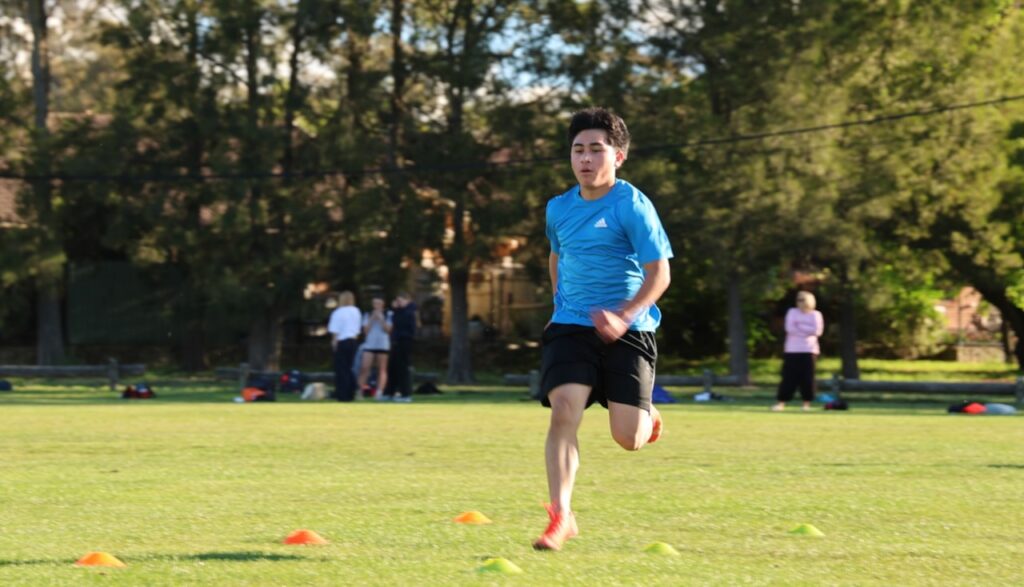
For an athlete with Aqlan’s acceleration qualities, the 60m is a particularly interesting event. The shorter distance places considerable emphasis on the start, acceleration and transition towards maximum velocity, all areas in which he has shown encouraging natural ability.
But perhaps one of his most valuable experiences came when he lined up in Heat 1 of the Open Men’s 100m.
This was a different challenge. Rather than competing only against athletes of a similar age or experience, Aqlan was testing himself in an open field that included more established sprinters. One of his opponents had previously raced against Australian sprint sensation Gout Gout, providing Aqlan with another glimpse of the standard of competition that exists beyond school athletics.
Despite heavy rain, Aqlan finished second in this heat and recorded a new personal best.
The result was encouraging, but the experience was arguably just as important. He was learning to manage the competition environment, race against unfamiliar athletes and maintain his focus when conditions were far from ideal.
Not bad for someone who had never raced on the track before joining FAST.
Consistency is making the difference
It’s easy to become excited about an athlete’s first victories, particularly when they arrive so soon after taking up a new sport. But from a coaching perspective, what matters most is understanding how those performances are being developed and what needs to happen next.
For Aqlan, the answer begins with consistency.
He has embraced regular training and the opportunity to work alongside athletes with considerably more experience. At FAST, that means exposure to structured acceleration sessions, maximum velocity development, technical drills and the strength and movement qualities that support sprint performance.
He is also learning from the training environment around him. Working alongside national-level athletes and other developing sprinters provides opportunities to observe how experienced competitors prepare, approach their sessions and manage the demands of the sport.
That environment is valuable, but ultimately Aqlan has to make the most of it himself. His willingness to turn up, listen, practise and keep challenging himself is what gives his natural ability a chance to develop into something more substantial.
His lightning start might be what first catches people’s attention, but his consistency and commitment are what will help determine how far he can take it.
A bigger goal on the horizon
Aqlan’s early performances have given him something he didn’t have when he first arrived at FAST: a competition history, some encouraging results and a clearer understanding of what he wants to achieve.
His longer-term ambition is to qualify for the Australian Athletics Short Track Championships, where he hopes to test himself against strong sprinters from around the country.
It’s an exciting goal, particularly for an athlete who has only recently begun competing, but it also gives us a direction for the development work ahead.
There is still plenty to improve. Aqlan is learning how to organise his natural acceleration, become more efficient as he reaches higher speeds and develop the strength, technical consistency and race experience needed to perform against increasingly competitive fields.
Qualification won’t come simply because he has natural talent or has won his first few races. It will require continued improvement, consistent training and the patience to build his performance over time.
That’s the challenge ahead, and it’s one Aqlan appears genuinely motivated to pursue.
Just the beginning
One of the most enjoyable aspects of coaching is watching an athlete discover something about themselves that they may never have imagined was possible.
Aqlan arrived at FAST without a track and field background, without school championship experience and without even owning his first pair of spikes. He brought enthusiasm, determination and a willingness to give something new a go.
A relatively short time later, he has won his first 100m and 60m races, competed in Open Men’s competition, recorded personal bests and begun setting his sights on national-level opportunities.
None of that guarantees what comes next, and we wouldn’t want to rush the process. There will be more to learn, difficult sessions, disappointing races and plenty of technical challenges along the way. Those experiences are all part of becoming an athlete.
What Aqlan has already demonstrated is that an unconventional starting point doesn’t have to limit where someone might finish. His school athletics opportunities may have passed him by, but his journey in the sport is now well underway.
For FAST, the exciting part isn’t simply how fast Aqlan is running today. It’s watching a motivated young athlete begin to understand his potential and commit himself to discovering how much further he can go.
From borrowed spikes to his first race victories, Aqlan has already come a long way.
And his story is only just beginning.
Comments are closed