
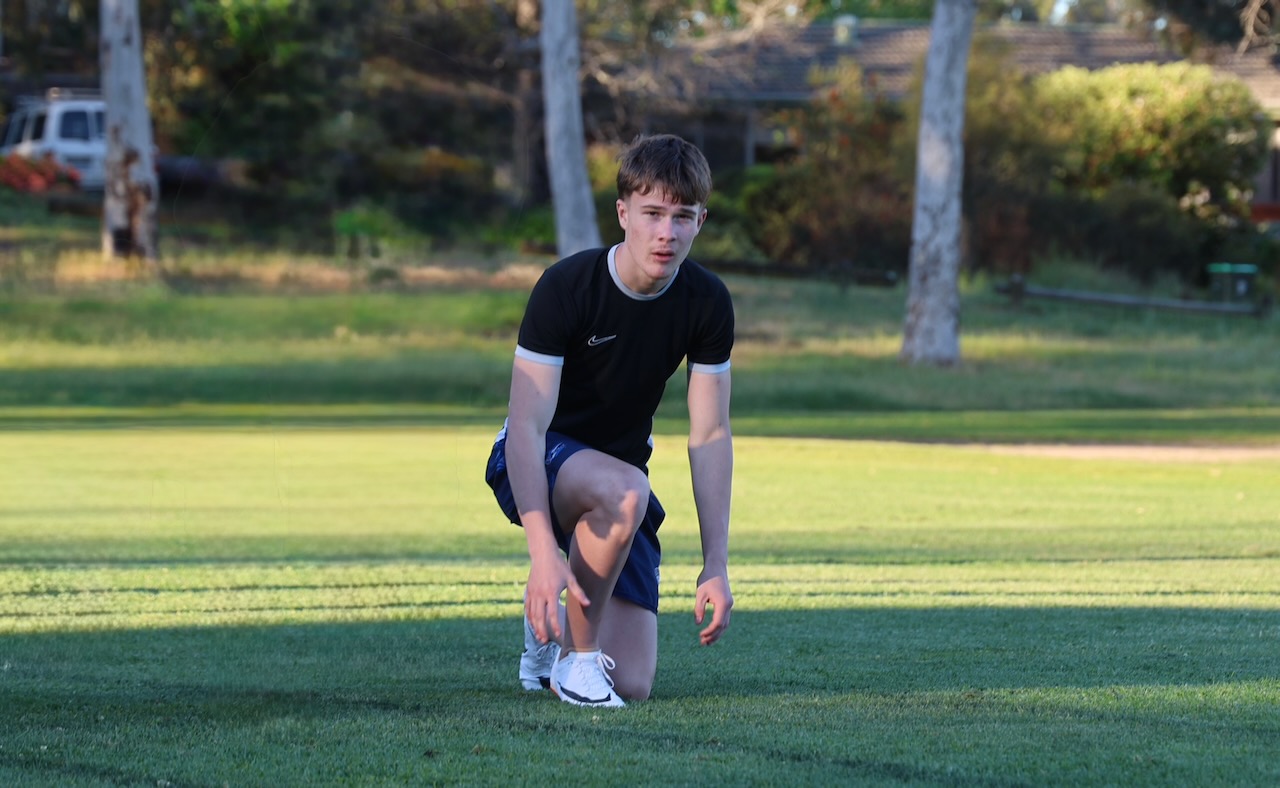
In September 2025, Ewan McElhinney finished 13th in his regional schools 200m. Twelve months later, he was an ACT 100m champion and preparing for the Australian All Schools Championships. What happened in between?
If you’d looked at the results of the 2025 Secondary North Region Athletics Carnival, there’s a good chance Ewan McElhinney wouldn’t have caught your attention.
Competing in the 15-year-old boys’ 200m, Ewan finished 13th in 28.14 seconds.
Nothing particularly remarkable about that result. He was a young athlete having a go at school athletics, much like hundreds of others across Canberra.
Fast-forward twelve months.
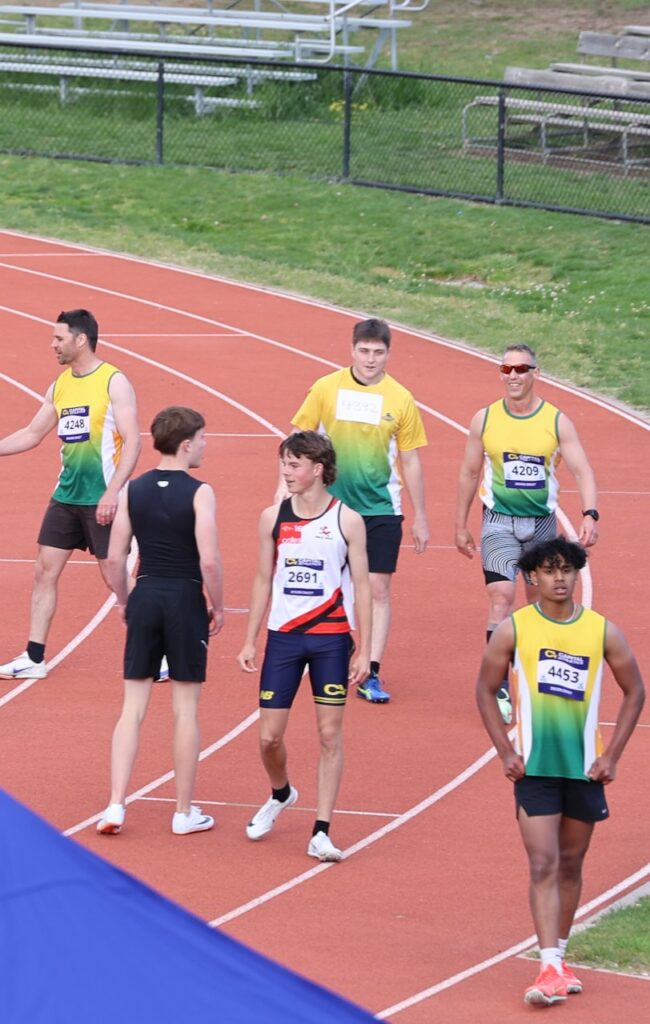
At the 2026 ACT Secondary Schools Track and Field Championships, Ewan won the 16-year-old boys’ 100m in 11.75 seconds, running into a 1.2 m/s headwind.
And now he’s preparing to represent the ACT at the Australian All Schools Championships in Perth this December.
From 13th at regionals to an ACT champion in just twelve months.
That’s quite a turnaround.
An athlete with plenty of sporting interests
Ewan hasn’t spent his childhood concentrating exclusively on athletics.
He’s played AFL with the Gungahlin Jets, basketball with the Ginninderra Rats and OzTag, gaining experience across sports that demand speed, agility, coordination and the ability to make decisions while moving.
Those experiences matter.
AFL involves repeated accelerations, changes of direction and running at different speeds. Basketball places considerable demands on coordination, movement and the ability to accelerate over short distances. OzTag adds another combination of speed, agility and spatial awareness.
None of those sports automatically produces a fast sprinter, but they provide young athletes with valuable movement experiences.
And when an athlete like Ewan begins developing more specific sprinting skills, there’s an opportunity to build on what they’ve already learned.
That’s something we particularly enjoy about coaching athletes from different sporting backgrounds.
They don’t arrive as blank slates. They bring experiences, abilities and movement habits developed through years of playing sport.
Our job is to help them develop those qualities further.
Twelve months can change quite a lot
Ewan’s results across the past year make interesting reading.
In September 2025, he was 13th in the regional 200m.
At the same competition in September 2026, now competing in the 16-year-old age group, he finished second in the 100m with a time of 11.52 seconds.
That performance was assisted by a substantial 4.5 m/s tailwind, so it isn’t a legal personal best. Nevertheless, finishing second showed how much more competitive Ewan had become.
A few weeks later, at the ACT Championships, he produced the performance that really mattered.
Running into a headwind, Ewan won the 16-year-old boys’ 100m in 11.75 seconds.
An ACT championship title.
And with it, the opportunity to represent his territory at the Australian All Schools Championships.
It’s the sort of progression that makes you look twice at the results.
But it’s also a reminder that we shouldn’t be too quick to decide what a young athlete is capable of based on their performances at fourteen or fifteen.
What our ACT Development Study has been telling us
Earlier this year, FAST published findings from our study of ten years of ACT school athletics results.
We wanted to better understand how young athletes develop, particularly whether early success reliably predicts who will be successful in later years.
One of the things we found was that athletes who perform well at a young age often remain competitive in the following year.
But that isn’t the same as saying the rankings are fixed.
Young athletes grow, mature and develop at different rates. Their sporting interests change, their opportunities change and their physical abilities continue to evolve.
Some children establish themselves among the leading performers early. Others make their most significant improvements during their teenage years.
Ewan’s journey is a particularly enjoyable example of why those differences matter.
If we’d looked at his 2025 regional result and decided he wasn’t a promising sprinter, we would have missed what happened next.
And that’s precisely why FAST doesn’t believe young athletes should be defined by where they currently sit in the rankings.
How fast you are today is not where you finish.
A familiar story at FAST
There’s another FAST athlete whose recent journey offers an interesting comparison.
Sam Blood.
Like Ewan, Sam’s development has shown how much can change during the teenage years.
Sam has continued progressing as a sprinter and recently recorded a 200m personal best of 22.72 seconds at the opening ACT Summer Series competition, despite running into a 2.0 m/s headwind.
He’s also improved his 100m performances and is working towards further progress ahead of Australian All Schools.
Ewan and Sam have different sporting backgrounds and different development histories, but their journeys reinforce a similar point.
We shouldn’t assume that the athletes who are fastest at thirteen will necessarily be the athletes who are fastest at seventeen.
Nor should we assume that someone who finishes outside the leading places at a school carnival has reached the limit of their potential.
Development takes time, and opportunities matter.
At FAST, we want athletes to have those opportunities, whether they’re already winning races or still discovering what they enjoy and what they might be capable of achieving.
From Canberra to Perth
In December, Ewan will travel to Perth for the Australian All Schools Championships.
It will be an opportunity to compete against some of Australia’s leading school-aged athletes, experience a national championship environment and discover what the next level of competition feels like.
There will be faster athletes, new challenges and plenty to learn.
And that’s exactly what makes the opportunity worthwhile.
Twelve months ago, Ewan was finishing 13th at a regional school carnival.
Now he’s preparing to represent the ACT.
Whatever happens in Perth, that’s an achievement worth celebrating.
We’re excited to see how Ewan continues developing, both as a sprinter and as a young sportsman.
And we hope his journey encourages other young athletes who might currently be finishing well outside the leading places at their own school carnivals.
Because you never know what the next twelve months might bring.
From 13th at regionals to Australian All Schools.
Not bad for a year’s work, Ewan!
Running Excellence grows.
Comments are closed