

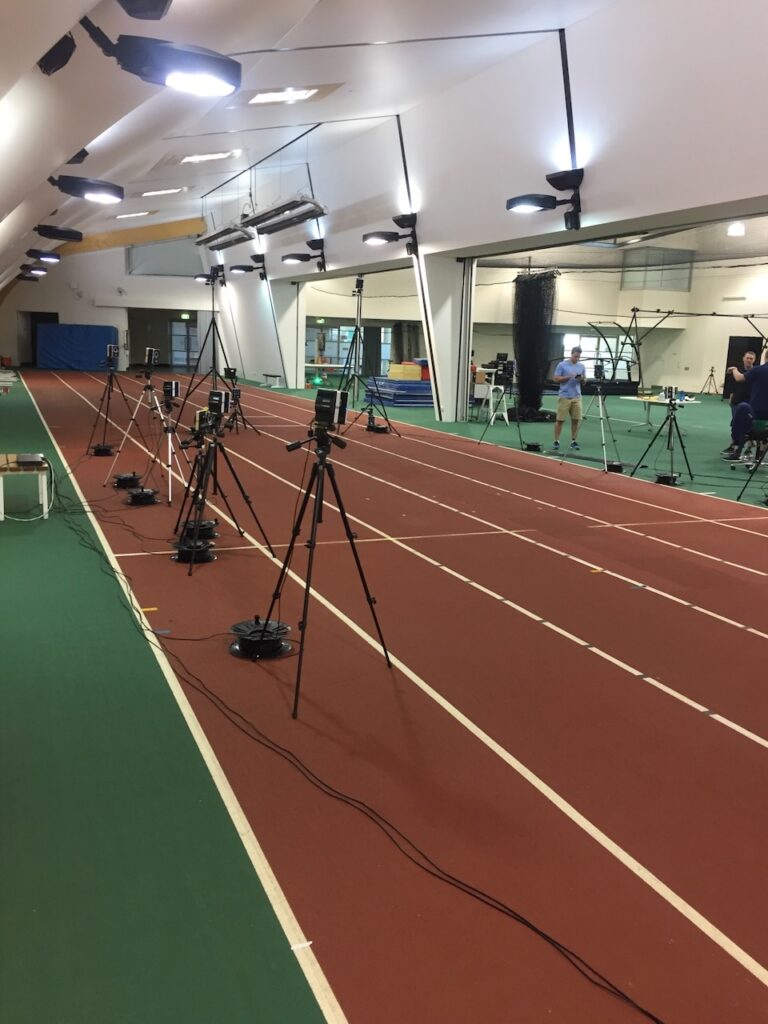
At FAST Running, we believe running excellence isn’t just built on the track—it’s also built in the lab. In January 2018, several of our athletes took part in a cutting-edge research study at the Australian Institute of Sport (AIS) Biomechanics Lab — a facility not open to the public and rarely accessed by community squads. This special opportunity exemplified our commitment to innovation and the integration of science and elite coaching.
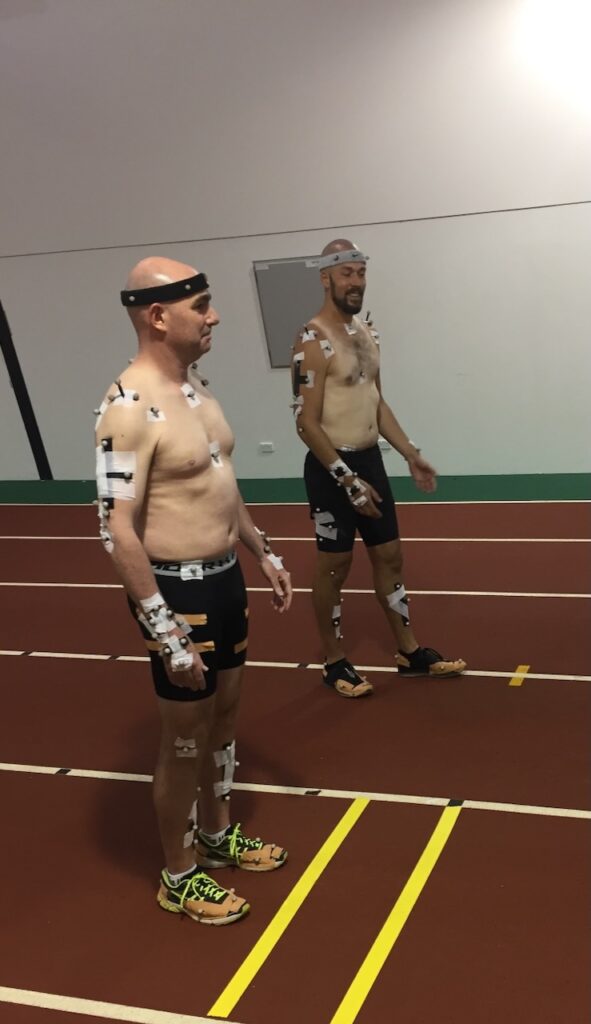
The study, titled “Late Swing Knee Mechanics in Elite Rugby Union Players and Trained Sprinters,” led by Claire Kenneally-Dabrowski and a team of internationally respected researchers, sought to understand how running mechanics during the late swing phase contribute to hamstring injury risk—a critical issue in sprinting and other high-speed sports like rugby.
Participating in this research allowed our athletes to not only contribute to a broader understanding of injury prevention but also gain personalised insights into their sprint technique and biomechanics, based on high-resolution data gathered from force plates, high-speed cameras, and the precision of the AIS’s world-class indoor track environment.
Key Findings: Sprinters vs Rugby Players
The study found that sprinters—like those in the FAST squad—demonstrate:
- Greater peak knee flexion during mid-swing, allowing for a more compact leg recovery.
- Faster angular velocity in knee extension, indicating more explosive movement patterns.
- Lower peak knee flexion moments and less negative work, suggesting that the hamstring is absorbing less force during late swing—a potential protective factor against injury.
These insights have directly influenced how we approach hamstring strength, mobility, and sprint mechanics in training. It’s a great example of science informing practice.
Latest Update
The most recent update from Claire Kenneally-Dabrowski and her team was published on May 19, 2025, in the British Journal of Sports Medicine. Titled “Where to next for hamstrings? A biomechanical and anatomical perspective,” this article provides a concise overview of current insights into hamstring injury mechanisms and proposes future research directions.
Benefits for Our Squad
While the original study aimed to compare elite rugby players and trained sprinters, the participation of our athletes created a rare opportunity to validate our technical models and refine individual programs based on elite data. The results not only reinforced our training methods but opened up new discussions within our coaching team around how sprint technique evolves under load and fatigue.
The research has also helped shape our ongoing emphasis on injury prevention through movement efficiency—a core pillar of our “Innovation in Training” strategy. And with direct follow-up from the research team years later, we’re continuing to see how long-term data supports better athletic outcomes.
A Partnership in Performance
This collaboration with the AIS reflects what FAST Running is all about: partnerships, science, and purpose-driven coaching. Whether we’re working with sports scientists, physios, or podiatrists, we know that great performance doesn’t happen in isolation—it’s the result of an ecosystem working together.
We are proud to have contributed to a study with national and international relevance, and even prouder that our athletes’ strides on the track helped advance scientific understanding of a problem affecting athletes worldwide.

Comments are closed