
In sport, breakthroughs are often described as if they appear suddenly.
An athlete runs a faster time.
A jumper clears a new height.
A performance barrier falls.
But what looks like a breakthrough is usually the visible result of something far less dramatic: a system working over time.
At FAST Running, progress is rarely accidental. It is engineered through structure, patience, and attention to detail.
The Long View of Development
Athletic development rarely moves in straight lines.
Athletes improve, plateau, adapt, and rebuild. Some seasons are defined by competition results, while others are devoted to refining mechanics, strengthening resilience, or rebalancing workloads.
The challenge for coaches is not simply to produce immediate performances. It is to design training environments that support athletes through each stage of development.
Acceleration mechanics must be built patiently.
Elastic strength must be layered progressively.
Speed must be protected as much as it is trained.
The long view requires discipline — from both athletes and coaches.
Small Adjustments, Big Outcomes
High performance is rarely the result of dramatic change.
More often, it emerges from small, deliberate adjustments repeated over months and years.
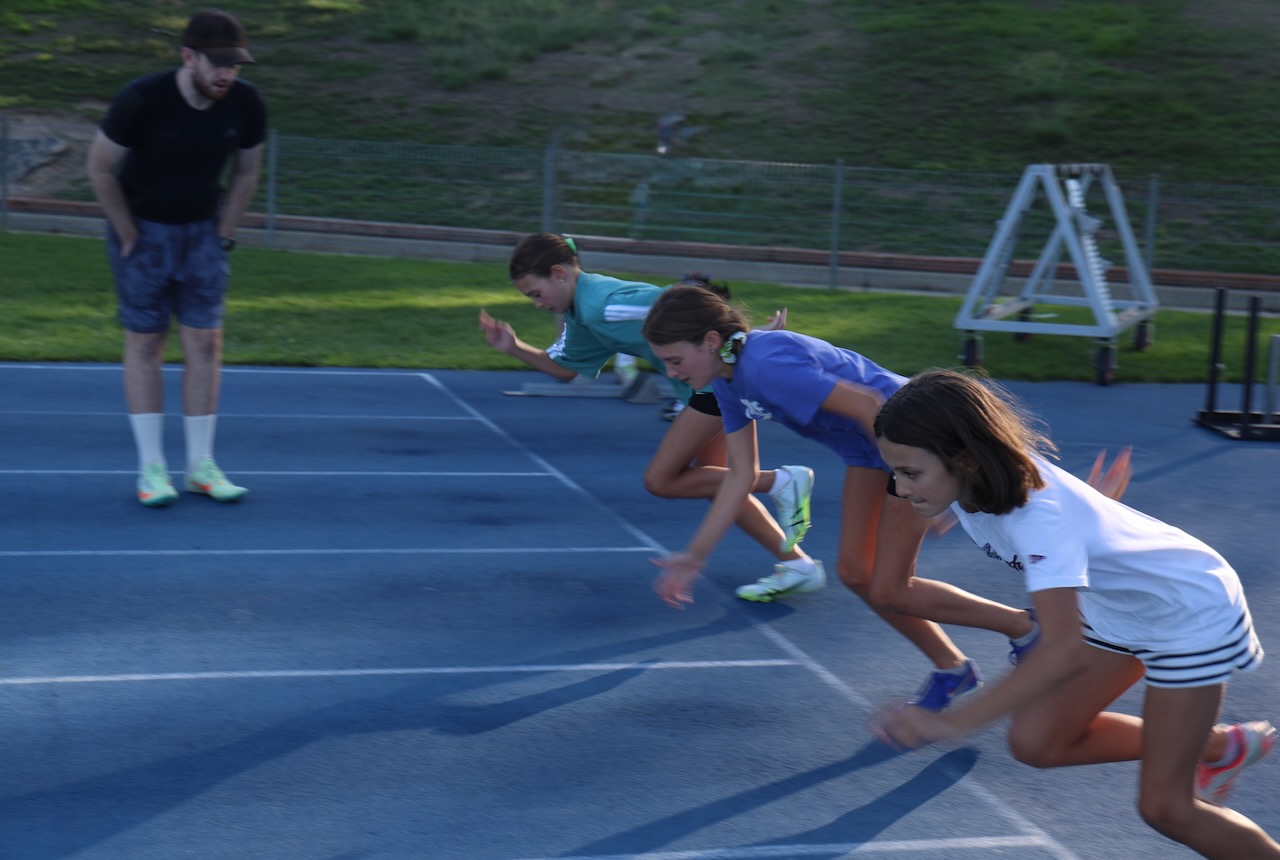
A slightly improved shin angle during acceleration.
A more efficient transition from drive phase to upright sprinting.
A technical cue that improves rhythm over the final metres of a race.
Individually, these changes may seem minor.
Together, they reshape performance.
At FAST Running, these details are not left to chance. They are observed, coached, refined, and reinforced until they become habits.
The Role of the Training Environment
Athletes develop best in environments where expectations are clear.
When athletes see others committing to the same process — showing up consistently, refining technique, and respecting progression — standards rise naturally.
Younger athletes observe what experienced competitors do.
Experienced athletes reinforce the culture through their consistency.
The result is a training environment where improvement becomes part of the identity of the group.
Leadership Through Consistency
Coaching leadership is often misunderstood.
It is not defined by loud speeches or dramatic interventions. Instead, it is expressed through consistency: in preparation, in communication, and in standards.
Athletes perform best when they know what the system expects and when they trust that the process will support their development.
At FAST Running, leadership is embedded in the environment itself.
Every session reinforces the same message: progress is built through deliberate work, repeated consistently over time.
Because in high performance sport, breakthroughs are rarely sudden.
They are constructed.
Comments are closed